Looking for Family Legal Services in Sea Point – Child Maintenance, Child Custody, Visitation Rights and Divorce Here at our law officers, we understand the struggle of your anxious search for family legal services. Most often, you under the impression that you may not find the legal services you require Continue Reading
Telelaw
[caption id="attachment_5575" align="alignleft" width="300"] National Water Day – Cape Town South Africa – Water Crisis[/caption]
World Water Day
Yesterday (22 March 2018) was World Water Day. A day where the focus is on the importance of water and raising awareness on the issues surrounding it. The residence of the Western Cape, South Africa all to well know of the scarcity of water, as in the last few years, water has become in less supply and expensive. Dam levels have declined compared to previous years, and at the time of writing this article, there has been no substantial amount of rainfall positively predicted for the coming winter season. What this tells us, is that both government and civil society need to work together to alleviate the water crisis in South Africa. This can be done by better water management and drilling into alternative sources of fresh water, to mention a few. Clearly some businesses have benefited from the crisis. People are purchasing bottled water in its gallons and the sale of 25 litre containers has sky rocketed. Almost every household owns a few containers. Then there is the Jojo tanks residence purchased and used to catch and store rain water, and water from water sources. All these costs money to the ratepayer. As Our Lawyer (Pty) Ltd is based in Cape Town, we felt it fitting to use our legal expertise to write something on the water crisis in celebration of World Water Day. We too are feeling the crisis in our office building where water saving measures are in place.Cape Town Water Crisis
The water crisis in Cape Town is therefore clearly a real issue affecting not only its residents, but industry alike. Currently Cape Town is facing level 6B water restrictions, which allows its residence less than 50 litres of water usage a day. This has been the case for the past few months. Prior to that, the quota per person was in the region of 85 litres of water usage a day. With these restrictions, comes higher water costs in that, the more you use, the more you would pay as compared to periods before level 6B. This could be compared to the “polluter pays” principle when it comes to pollution. [caption id="attachment_5573" align="alignleft" width="300"] Water Quota at Newlands Springs Cape Town[/caption]
Water Outages and Problems
As with the electricity crisis not too long ago, Cape Town is now experiencing water outages. And in some areas, more than others. Certain areas experience blue coloured water coming from their taps, which may not be potable. Then there is the issue of the controversial water meters being installed for homes across Cape Town. In some areas, the communities opposed its installations citing faulty devices as a reason. When the device fails, residence is left without water until it is repaired, and sometimes not soon enough. This can be particularly annoying as the devices comes at a cost to the ratepayer. No matter how you look at it, water is still a vital resource on any level. We need it for our daily living. Industry requires it for their growth. And farms require it to ensure that there is food on our tables. But where does this leave us going forward? As can be seen, clearly there is a crisis, and costing us. Is there light at the end of the tunnel, or water at the bottom of the pit?A right to water in South Africa
South Africa is an arid country with a small percentage of its rainfall available as surface water. It further has one of the lowest conversion ratios in the world. Each time we lose a water resource due to pollution or to poor conservation, we are driven closer to ‘water resource extinction’. It is therefore critically concerning that many of the Western Cape’s rivers are heavily polluted.
What does our Constitution say?
Section 24 of our country’s constitution states that “everyone has the right to an environment that is not harmful to their health or well-being.” The same section further states that “the environment is to be protected, for the benefit of present and future generations, through reasonable legislative and other measures that prevent pollution and ecological degradation; promote conservation; and secure ecologically sustainable development and use of natural resources while promoting justifiable economic and social development. Furthermore, section 27 of our Constitution states that “everyone has the right to have access to sufficient water.”Alternative Sources of Water in Cape Town
Cape Town has now bought into the idea of desalination. There are currently three desalination plants in Cape Town, hoping to be up and running in a few weeks’ time. This however would not supply Cape Town with all its needed water should it be fully up and running. Then there is the issue of borehole water. Many residences and businesses have invested in drilling boreholes. This however comes at a cost and the water is not drinkable. It seems whatever the alternative sources are, it would cost the user a pretty penny. [caption id="attachment_5572" align="alignleft" width="300"] Water Crisis Cape Town Newlands Springs[/caption]
Spring Water
The South African Breweries has a spring water collection point in Newlands Cape Town open to the public. Here residence may collect their water. There is also another collection point a few minutes’ walk away. With only five taps, and long queues, even being open twenty-four hours a day, would not support the entire Cape Town population. People may find it easier to just purchase water from the store. There are quite a few springs in Cape Town, but not all of them are open to the public. You will find people queuing in Muizenberg or collecting the water coming from the Mountain on Boyes Drive. Be that as it may, it would be clearly impracticable for a household of five people to collect their free water from springs, to alleviate a huge water bill. People work, and there are costs involved in transporting the water.The way forward
[caption id="attachment_5574" align="alignleft" width="213"]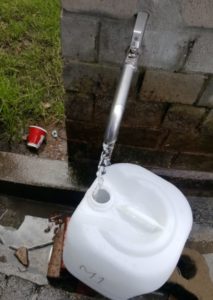 25 LWater Containers being filled.[/caption] Without pointing fingers, it is clear that something has gone wrong with regard to water management in the Western Cape. How can things change so quick? But we are where we are, and now with our eyes open. We cannot depend on government solely anymore to save us, we need to take positive action. If this means installing water saving devices, collecting water, or drilling boreholes; that is what we must do. In any event, our pockets will feel it. We wish the City success with their water desalination venture, and making use of groundwater, and truly wish the Winter season will fill up our dams. However, we all need to have systems and contingencies in place, as this crisis is one that may be around for some time. For environmental legal services, visit Envirolaws (Pty) Ltd. Happy World Water Day! The Our lawyer (Pty) Ltd Legal Team
World Water Day Yesterday (22 March 2018) was World Water Day. A day where the focus is on the importance of water and raising awareness on the issues surrounding it. The residence of the Western Cape, South Africa all to well know of the scarcity of water, as in the Continue Reading
Maintenance Court Johannesburg
There are number of child maintenance courts in Johannesburg. Below are local maintenance courts that could be close to your area:- Johannesburg Family Court Centre – Magistrates’ Court
- Johannesburg Central Magistrate Court – Magistrates’ Court
- Hillbrow Magistrates Court – Magistrates’ Court
[caption id="attachment_4278" align="alignleft" width="300"] Call us on: 0211110090
Email: [email protected][/caption] To claim child maintenance/child support, you should visit your closest maintenance court in your area.Maintenance Court Procedure
Find out where about is the closest magistrates’ court in your area and pay them a visit. The following will be required:- Birth certificate of your child/children.
- Your identity document.
- Proof of residence.
- A divorce settlement.
- Proof of your monthly income and expenses.
- The personal details of the parent required to pay maintenance such as their name, surname physical and work address.
- Copy of your bank statement.
[caption id="attachment_4279" align="alignleft" width="300"] Call us on: 0211110090
Email: [email protected][/caption] In attempt to claim maintenance, you will have to fill in a detailed form stipulated by the Magistrate’s Court. This form shall request all details regarding your income and expenses – lighter expenses such as entertainment and pocket money are also included. Expenses of parents and the child are however, listed separately. The court however, will take a number of factors into consideration when stipulating the amount of maintenance that should be paid. Both parent’s income will be analysed and the court’s decision will be based accordingly.Child Maintenance Calculator
Our Lawyer Pty Ltd introduced a range of free legal products and services for your convenience. The child maintenance calculator. gives you a better understanding on how much maintenance you should be claiming or receiving. [caption id="attachment_4282" align="alignleft" width="300"] Call us on: 0211110090
Email: [email protected][/caption] Below are our free legal products:- Free Child Maintenance Calculator
- Basic Free Will Tool Kit
- Free Muslim or Islamic Shariah Will Template
- Free Divorce Starter Tool Kit
- Free DIY Urgent Child Contact
Our legal products and services can be accessed nationally and caters to those residing out of Cape Town as well. We have recently introduced our national contact number in which you can contact us on 087 701 1124 for your convenience. Feel free to contact us at any given point and we’ll be sure to swiftly return your call and have an online appointment made for you.Child Maintenance Office numbers
Feel free to visit us at our law offices for friendly, expert legal advice and enjoy free Wi-Fi in comfortable setting. Our legal consultations are one-on-one and confidential in which the legal expert will be advising you through the process. Are you residing out of Cape Town? No problem. Make use of our national number and call us on 087 7011 124 to have your online appointment made for you. We are able to conduct legal consultations through Skype/video call for your convenience. Connect with us today! Our Lawyer Pty Ltd offers a range of family law legal services for your convenience. You can find our office in the heart of the buzzing CBD at Suit 702, 7th Floor, The Pinnacle, corner of Strand and Burg Street, Cape Town. Feel free to visit us at our offices in a safe, central setting and enjoy professional, confidential, legal consultations at its best. Call our legal offices today and have your legal appointment booked online for a legal consultation in child maintenance. Our Lawyer Pty Ltd is highly accommodating towards its clients and believe in making life easier for its clients. This is why we have decided to initiate an online appointment system as well as an online platform in which you can share your thoughts and post your legal questions.
Maintenance Court Johannesburg There are number of child maintenance courts in Johannesburg. Below are local maintenance courts that could be close to your area: Johannesburg Family Court Centre – Magistrates’ Court Johannesburg Central Magistrate Court – Magistrates’ Court Hillbrow Magistrates Court – Magistrates’ Court To claim child maintenance/child support, you Continue Reading
Parenting Plans Questions and Answers

We introduced this Parenting Plans Questions and Answers page for you to post questions you may have on the topic. For example, if you want to know whether you should enter into a parenting plan, pose a question with some background facts. At the same time, should you be able to assist others who posted questions below, requiring some advice on Parenting Plans, please proceed and reply to their comments. In that manner, we would all be able to assist each other and increase our online knowledge base. Therefore, although we a are legal consultancy, specialising in family law, you may have problems or experiences that we have not encountered. Let us share in our knowledge of Parenting Plans.Sections 33 and 34 of the Children’s Act 38 of 2005
Sections 33 and 34 of the Children’s Act 38 of 2005 (the Act) deals with “parenting plans”. People that would find these sections useful are parents, legal practitioners, social workers, psychologists, social services professional. For an in-depth outline of the sections, visit this link on parenting plans and the law.What is a parenting plan?
The Children’s Act 38 of 2005 does not provide a definition of a parenting plan. However, looking at the provisions of the Act and its Regulations dealing with parenting plans, one could define it as a written agreement between co-holders of parental responsibilities and rights outlining in detail their respective responsibilities and rights of care, contact, guardianship and maintenance with regard to a child.Who should agree on a parenting plan?
Not all holders of parental responsibilities and rights need to agree on a parenting plan and have it registered with a Family Advocate or made an Order of the High Court. Parenting Plans should be entered into only if there is a need for it. However, the choice is always there for the parties should they wish to formalise one. Section 33 of the Act provides for two (2) situations in which a parenting plan comes into play. This I shall refer to as the optional situation and the mandatory situation. For an in-depth outline of the sections, visit this link on parenting plans and the law.Other family law resources on this website
There are various other family law resources on this website that you may find useful. For example, there is a downloadable child maintenance calculator. The resources may assist you with whatever questions you have, or the information you require on Parenting Plans. Therefore, after posting your question, or any time after, have a look at the useful resources and information on our website. Some of these resources are listed hereafter.Articles and Q&A
There is a range of legal articles on this website dealing with various family law issues. Some of these articles are straight forward, outlining the legal position on a family law related topic. For example, how to apply for child maintenance, or how to get divorced. Other articles are written in the form of answering a specific legal question. For example, do I pay maintenance if I am unemployed, or what do I do if I want to leave the country with my child, and the other parent does not want to provide consent? Those articles are in blog format. This means that you are welcome to comment or pose questions to increase our knowledge base. The clear idea behind our website is that we want to make family law legal information more accessible and available to the public.Downloadable resources
We created some downloadable resources for free on this website. They are: 1 Free Basic Will Tool Kit 2. Free Shariah Will Template 3. Free Divorce Starter Tool Kit 4. Free Child Maintenance Calculator 5. Free DIY Urgent Child Contact Toolkit Feel free to download these useful resources. Click on the links above, and complete the online purchase process. The purchase price is R 0. Thereafter, a downloadable link would be emailed to you. Once you received the email, download it as soon as possible as the link would expire after two months. We hope that we assisted you with any queries you had on Parenting Plans. If not, feel free to arrange a consultation with us.
Sharing is Caring
If you find any of our articles and posts interesting, or possibly useful to others, please like and share it on Social Media by clicking on the icons below. Should you require any other legal services and advice, not related to family law, visit Private Legal.
Parenting Plans Questions and Answers We introduced this Parenting Plans Questions and Answers page for you to post questions you may have on the topic. For example, if you want to know whether you should enter into a parenting plan, pose a question with some background facts. At the same Continue Reading
Child Custody, Contact rights and more – Children’s Act 38 of 2005
This article gives a short introduction to the Children’s Act.
The Children’s Act 38 of 2005 was a very welcomed piece of legislation. It assists us in answering many issues relating to Family Law. For example. What are the rights of unmarried fathers? Do I as a father of a child born out of wedlock have rights? Do I as a father of a child born in terms of a religious marriage have rights?
Parents who are involved in disputes regarding their children should educate themselves on the provisions of the Children’s Act.Challenges for unmarried fathers
In our view, unmarried fathers almost always experienced difficulties regarding access to their children if they were separated from their mother. What is even worse, is if a couple was married in terms of religion or custom, and not civilly (e.g. in Court), and the parties separated, where the unmarried father’s position would be the same as that of an unmarried father who was never married to the mother religiously or customary.Rights of Unmarried Fathers in South Africa
However, if a party was married civilly and divorced, the Divorce Court in the past would deal with the issue of care and contact in relation to the minor children. The usual phrase used was that the mother would have custody over the child, with the father having rights of reasonable access. The position has however improved with the inception of the Children’s Act 38 of 2005 for both divorced and unmarried fathers. As outlined below, an unmarried father would have rights over a child, akin to that of a married father, as long as certain conditions are met.The persistent problem for unmarried parents
However, in our view, based on the custody and contact matters we dealt with since the inception of the Act, mothers are still seen as primary caregivers in practice, and if the mother does not want the father to have contact or care with the child or a say in his or her life, the father would still have to follow the procedures in the Act to give effect to his rights. Sometimes, approaching the Court is the only solution. However, on the whole, the Children’s Act 38 of 2005, is a step in the proper direction for unmarried fathers, and children born out of wedlock. We hope it would improve even more.The coming into effect of the Children’s Act 38 (Act 38 of 2005)
All sections of the Children’s Act 38 (Act 38 of 2005) came into effect on 1 April 2010. The Children’s Act 38 of 2005 brought many changes regarding the responsibilities and rights of parents and children and also deals with other aspects regarding children, e.g. contraceptives and abortion, etc. Interesting to note are the following sections listed below, there are however others depending on your issues.Parental responsibilities and rights
Section 18 of the children’s act 38 of 38 2005 states the following: (1) A person may have either full or specific parental responsibilities or rights in respect of a child. (2) The parental responsibilities and rights that a person may have in respect of a Child, include the responsibility and the right- (a) To care for the child; (b) To maintain contact with the child; (c) To act as guardian of the child; and (d) To contribute to the maintenance of the child. (3) Subject to subsections (4) and (5), a parent or other person who acts as guardian of a child must (a) Administer and safeguard the child’s property and property interests; (b) Assist or represent the child in administrative, contractual and other legal Matters; or (c) Give or refuse any consent required by law in respect of the child, including- (I) consent to the child marriage (ii) Consent to the child adoption; (iii) Consent to the child departure or removal from the Republic; (iv) Consent to the child application for a passport; and (v) Consent to the alienation or encumbrance of any immovable property of the child. (4) Whenever more than one person has guardianship of a child, each one of them is competent, subject to subsection (5), any other law or any order of a competent court to the contrary, to exercise independently and without the consent of the other any right or responsibility arising from such guardianship. (5) Unless a competent court orders otherwise, the consent of all the persons that have guardianship of a child is necessary in respect of matters set out in subsection (3)(c). We shall now deal with what the Children’s Act of 2005 says the meaning of care and contact are, which are not the traditional words used in the past. In the past, the courts and the legal fraternity used the terms custody and access. This was reflected in divorce papers. Now legal documents use the terms care and contact although some might disagree, it is respectfully submitted that custody is an aspect of care and the Children’s act provides broader responsibilities and rights in this regard.Meaning of Care in the Children’s Act
The Children’s Act 38 of 2005 defines care as follows: Care in relation to a child, includes, where appropriate- (a) Within available means, providing the child with- (i) a suitable place to live; (ii) Living conditions that are conducive to the child’s health well-being and development; and (iii) The necessary financial support; (b) Safeguarding and promoting the well-being of the child; (c) protecting the child from maltreatment, abuse, neglect, degradation, discrimination, exploitation and any other physical, emotional or moral harm or hazards; (d) respecting, protecting, promoting and securing the fulfilment of, and guarding against any infringement of, the child rights set out in the Bill of Rights and the principles set out in Chapter 2 of this Act; (e) guiding, directing and securing the child education and upbringing, including religious and cultural education and upbringing, in a manner appropriate to the child age, maturity and stage of development; guiding, advising and assisting the child in decisions to be taken by the child in a manner appropriate to the child age, maturity and stage of development; (g) Guiding the behaviour of the child in a humane manner; (h) Maintaining a sound relationship with the child; (I) accommodating any special needs that the child may have; and (j) Generally, ensuring that the best interests of the child is the paramount Concern in all matters affecting the child;Meaning of Contact in the Children’s Act
According to the Children’s Act 38 of 2005, contact means the following: Contact in relation to a child, means- (a) Maintaining a personal relationship with the child; and (b) If the child lives with someone else- (I) communication on a regular basis with the child in person, including- (AA) visiting the child; or (Bb) being visited by the child; or (ii) Communication on a regular basis with the child in any other manner, Including- (AA) through the post; or (Bb) by telephone or any other form of electronic communication; It is my view that the Children’s Act 38 of 2005 attempts to place greater value to contact between parent and child. There are many sections in the Children’s Act 38 of 2005 that deals with parental responsibilities and rights of parents and children. Get hold of the Act and see how it applies to you. If you are an unmarried father and your rights are being limited by the mother of the child, I advise you to contact a family legal practitioner and discuss your rights with him or her. And to all unmarried fathers out there, fight for your rights as a father, this would be in the child’s best interest.Sharing is Caring
We are certain that you found the above article useful and interesting. Please consider sharing it on the share buttons below. They include Facebook, Twitter, LinkedIn, WhatsApp, Gmail and more. Someone may find it useful as well. Should you require business advice or services, feel free to click on these links: Business SA | Private Legal | Envirolaws
Child Custody, Contact rights and more – Children’s Act 38 of 2005 This article gives a short introduction to the Children’s Act. The Children’s Act 38 of 2005 was a very welcomed piece of legislation. It assists us in answering many issues relating to Family Law. For example. What are Continue Reading
I never saw my child for months – How do I Obtain Urgent Access to Your Children Without the Services of a Lawyer?
Are you a father or mother whose ex-partner is refusing you access or contact with your child? If so, you have the right to seek relief from the Court for urgent access. When a couple has a child, they often agree on what is best for their child, actively contributing to the child’s life even if they are no longer together. The father typically maintains regular contact and bonds with the child. However, once the relationship ends, disagreements may arise over what constitutes the best interests of the child, particularly regarding the father’s access. In such cases, the mother might deny access outright or impose strict conditions that limit the father’s visitation. If the mother refuses access or imposes conditions that are not in the child’s best interest, the father has grounds to urgently approach the Court for relief. The same applies if the role were reversed. Navigating court procedures can be quite complicated. Therefore, it is strongly recommended that you consult an attorney experienced in urgent applications. If possible, the attorney should have an advocate available to assist you with the application in court, whether or not there is opposition. However, if you choose to represent yourself, please continue reading for guidance on making an application in the High Court.The Court Procedure
Since your Court application is urgent, it should be made via affidavit rather than orally in court. However, you may still be required to provide oral evidence at the Judge’s discretion to clarify certain issues. This requirement can usually be avoided if your documents are well-prepared. To start, you need to draft two documents: a Notice of Motion and a founding affidavit. Although the text below references an attorney or advocate, you can complete this process on your own. For simplicity, the terms “contact” and “access” are used instead of “care” and “contact.”What is the Notice of Motion?
In the Notice of Motion, you clearly state what you want the Judge to grant you, similar to the prayers included in a summons. Your main request is for urgent access to your child. Because you are making an urgent application, you will be bypassing certain court rules regarding timeframes and procedures. Therefore, your first request to the Court should be for it to condone your non-compliance with its rules. Next, specify the relief you are seeking, generally in the form of an interim order that can be finalized later. Typically, you will request a rule nisi. An example of the prayers in an urgent access application in the High Court are as follows:- Condoning the Applicant’s non-compliance with forms and service and time periods provided in the Uniform Rules of this Honourable Court and permitting this Application to be entertained as a matter of urgency in terms of Rule 6(12) of the Rules of Court;
- That a Rule Nisi be issued, calling upon the Respondent to appear before Court on ____________________ 2026 at 10:00, in order to show cause why an Interim Order should not be confirmed in the following terms:-
- That the Applicant shall have unsupervised contact to the minor child as follows:
- Every alternative weekend commencing from Friday 18:00 to Sunday at 18:00.
- That the provisions above shall operate as an Interim Order, with immediate effect, pending the return date of the Rule Nisi;
This document is signed by your attorney, or by you if, you are acting in person.What is the Founding Affidavit?
In your Founding Affidavit, you must provide relevant information under oath. This includes details about yourself, the mother of the child, and the child. You will also need to provide information on several or more of the following matters: – Background information about your relationship with the child’s mother
– Your past access to the child
– Past involvement in the child’s life
– When access to the child ceased or lessened, along with the circumstances surrounding this
– Past maintenance or attempts to support the child
– Why the application is urgent and why substantive relief cannot be afforded to you in due course
– Any other relevant informationHow do I Issue and serve the Urgent Application on the other side?
Once the Notice of Motion and Founding Affidavit are complete, your attorney will make the necessary copies. They will then have the application issued in court, which will provide a case number. If possible, you should have the application served on the child’s mother in a timely manner. You should also serve the Office of the Family Advocate. You can utilize the office of the Sheriff, or your attorney may serve the papers directly to the mother.What happens if there is Opposition?
If the mother opposes the relief sought after being served with the application, she should file an opposing affidavit, to which you will need to reply. Both parties will then argue the matter before the Judge.What happens at teh Urgent Hearing at the High Court?
If your matter is set down on the Court Roll, the Judge will have already reviewed the papers filed. You will wait for your matter to be called. If your case is to be heard before the Urgent Judge on duty that day, you or your Advocate must present the file to the Judge in advance for review. If the mother or her Advocate is present in court and the parties cannot reach a settlement, they will argue the matter before the Judge. However, if the mother has been duly served but does not appear in court, the process may proceed more quickly. After the Judge has made a decision on the matter, the following may occur: – The Judge may grant the urgent access requested
– Grant you urgent access, but not under the terms you requested
– Refuse to grant any relief without a family advocate report
– Dismiss your application for lack of merits and/or urgency. We are certain that you found the above article useful and interesting. Please consider sharing it on the share buttons below. They include Facebook, Twitter, LinkedIn, WhatsApp, Gmail and more. Someone may find it useful as well.
- That the Applicant shall have unsupervised contact to the minor child as follows:
- Every alternative weekend commencing from Friday 18:00 to Sunday at 18:00.
I never saw my child for months – How do I Obtain Urgent Access to Your Children Without the Services of a Lawyer? Are you a father or mother whose ex-partner is refusing you access or contact with your child? If so, you have the right to seek relief from Continue Reading

Worldwide Law & Legal Directory
Dear Private Legal – PTYLtd., We trust this message finds you well, and are writing to you regarding your existing directory listing:

Private Legal – PTYLtd.
At LawFirms1, we are continually striving to provide you with valuable tools to enhance your online presence and competitiveness. Today, we are excited to introduce a powerful new feature that can significantly impact your digital strategy – Competitor Social Media Monitoring.
What is Competitor Social Media Monitoring?
Competitor Social Media Monitoring is a cutting-edge tool that allows you to track and analyse the social media activities of your competitors directly from your Inbox. With this feature, you can gain real-time insights into your competitors’ social media strategies, content performance, engagement metrics, and much more.
A few examples of the ones you can monitor:

African Legal Information Institute 
SD Law South Africa 
SchoemanLaw Inc 
Erasmus Ranchod & Associates 
Straughan Inc. 
Marlon Shevelew and Associates Inc – Attorneys, Notaries and Conveyancers 
Abrahams and Gross Attorneys 
Our Lawyer (Legal Services | Referrals | Attorney | Advocate) 
Adriaans Attorneys 
Maurice Phillips | Wisenberg
Benefits of Competitor Social Media Monitoring:
Strategic Insights: Understand what types of content and strategies are resonating with your competitors’ audiences, helping you fine-tune your own social media approach.
Stay Ahead: Get a competitive edge by staying informed about your rivals’ latest promotions, campaigns, and announcements. This knowledge can help you respond proactively and adapt your strategies accordingly.
Identify Trends: Discover emerging industry trends and best practices by analyzing what’s working for your competitors. Use this information to align your content with current market demands.
Benchmark Performance: Compare your social media metrics against those of your competitors. Identify areas where you excel and areas where you can improve to outperform the competition.
Enhanced Engagement: Engage with your competitors’ audiences strategically by participating in relevant conversations and discussions, expanding your reach, and potentially attracting new customers.
How to get started:
Getting started with Competitor Social Media Monitoring is easy. First click here to log in to your LawFirms1 account. From there, add your competitors’ listings pages and start tracking their activities.
We believe that this feature can be a game-changer for your business, providing you with the data-driven insights needed to refine your social media strategy and maintain a competitive edge in your industry.
Don’t miss out on this opportunity to gain a deeper understanding of your competition and enhance your online presence. Sign up for Competitor Social Media Monitoring today and take your digital strategy to the next level.
Thank you for being a valued member of LawFirms1. We look forward to seeing the positive impact this feature can have on your business.
Best regards,
The LawFirms1 Team

|
Worldwide Law & Legal Directory Dear Private Legal – PTYLtd., We trust this message finds you well, and are writing to you regarding your existing directory listing: Private Legal – PTYLtd. At LawFirms1, we are continually striving to provide you with valuable tools to enhance your online presence and competitiveness. Continue Reading
Relocation with my minor child to Italy, Venice (Consent and Refusal) – Advocate Muhammad Abduroaf
The world is becoming a much smaller place, and technology plays a huge role. People are moving across the world for employment, love and happiness, something that was not the norm a few decades ago. There is no reason why you should remain in South Africa if you can find a better life for yourself and your family overseas. Moving overseas may provide you with the quality of life you want or the possibility of experiencing things you always wanted. The same applies to your child or children relocating with you. Relocation of your minor child to Venice, Italy
If you are single and do not have any minor children, then moving around the world would not be too complicated. All you need to do is ensure that you have the necessary travel documentation and travel ticket (and spending money), and off you go. However, if you want to travel with your minor children (for example, ages three or four) or relocate to another country, things may not be that simple. Firstly, if there is another parent, and he or she has parental responsibilities and rights, then his or her consent is required. For example, let us say you live in Durban or Pretoria, South Africa, and you want to relocate to Venice, Italy, you would require the other parent’s consent to leave South Africa with your minor child. This can cause challenges, especially if the staying parent (in South Africa) does not agree to the relocation. What about Passport Consent to travel or relocate to Venice, Italy?
The same applies when it comes to your minor child applying for a South African passport to relocate to Italy, or any country. Both parents who have parental responsibilities and rights of guardianship will have to consent to the minor child’s passport application as well. In this regard, both parents have to be at the Department of Home Affairs (or the relevant bank that also assists with passport application) when making the Application with the minor child. This can be challenging if you have a disinterested parent who does not want to cooperate with the passport application. As you will see later, legal action would need to be taken. What are the steps to follow when I want to relocate to Venice, Italy with my minor child? There is there another parent.
To simplify the process for relocation, the first step would be to receive the other parent’s consent in principle for the relocation and that he or she will co-operate in this regard. Once that has been resolved, the parent relocating would need to make the appointment for the minor child’s passport application as well as the application for the relevant VISA. Each country has different requirements; however, seeing that it is a relocation, you need to apply for the correct VISA. For that, you need the Passport.
Once the visa and travel arrangements have been finalised, the parent remaining behind will sign a parental consent letter for the international travel. That letter can be found on the Department of Home Affairs website. Basically, the parent remaining behind would state that he or she gives consent for the minor child to leave the Republic of South Africa and travel and/or relocate to Venice, Italy. What can I do if the other parent does not want to consent to the minor child’s relocation to Venice, Italy?
If the parent remaining in South Africa does not want to consent to the minor child’s passport application and/or his or her relocation to Venice, Italy, then you would need to approach the Court. The Court, as upper guardian of the minor child, may order that the parent’s consent for the passport application and relocation be dispensed with. What this entails is submitting Court documents explaining why you want to relocate to Venice, Italy. The other parent would also have an opportunity to give reasons why he or she objects.
At the end of the process, the Court would determine what is in the minor child’s best interests. If it is in the minor child’s best interests to relocate to Venice, Italy, the Court would make it possible despite the issue of consent or refusal. What is the first step I should take if the other parent does not want to consent to the minor child’s passport application and/or relocation to Venice, Italy?
If the other parent does not want to consent to the passport application and/or the relocation of the minor child to Venice, Italy – in that case, we suggest you approach an attorney or advocate (trust account) to assist you with the legal process. He or she would then contact the other parent explaining the reasons for the relocation and request the necessary consent. If the parent remaining in South Africa does still not agree to the passport application and/or to the relocation to Venice, Italy, then the attorney or advocate will proceed to take the matter to court. The legal route can be expensive. However, it is necessary to make the relocation of the minor child possible. You may also attend to the legal process yourself. Getting legal assistance or help with your relocation application to Venice, Italy
If you require legal assistance or representation with relocating to Venice, Italy due to the other parent not cooperating or providing consent, then feel free to contact us for assistance. The Firm Advocate, Muhammad Abduroaf, deals with these types of matters.
Relocation with my minor child to Italy, Venice (Consent and Refusal) – Advocate Muhammad Abduroaf The world is becoming a much smaller place, and technology plays a huge role. People are moving across the world for employment, love and happiness, something that was not the norm a few decades ago. Continue Reading
Relocation with my minor child to Mexico, Cancún (Consent and Refusal) – Advocate Muhammad Abduroaf
The world is becoming a much smaller place, and technology plays a huge role. People are moving across the world for employment, love and happiness, something that was not the norm a few decades ago. There is no reason why you should remain in South Africa if you can find a better life for yourself and your family overseas. Moving overseas may provide you with the quality of life you want or the possibility of experiencing things you always wanted. The same applies to your child or children relocating with you. Relocation of your minor child to Cancún, Mexico
If you are single and do not have any minor children, then moving around the world would not be too complicated. All you need to do is ensure that you have the necessary travel documentation and travel ticket (and spending money), and off you go. However, if you want to travel with your minor children (for example, ages three or four) or relocate to another country, things may not be that simple. Firstly, if there is another parent, and he or she has parental responsibilities and rights, then his or her consent is required. For example, let us say you live in Paarl or Musina, South Africa, and you want to relocate to Cancún, Mexico, you would require the other parent’s consent to leave South Africa with your minor child. This can cause challenges, especially if the staying parent (in South Africa) does not agree to the relocation. What about Passport Consent to travel or relocate to Cancún, Mexico?
The same applies when it comes to your minor child applying for a South African passport to relocate to Mexico, or any country. Both parents who have parental responsibilities and rights of guardianship will have to consent to the minor child’s passport application as well. In this regard, both parents have to be at the Department of Home Affairs (or the relevant bank that also assists with passport application) when making the Application with the minor child. This can be challenging if you have a disinterested parent who does not want to cooperate with the passport application. As you will see later, legal action would need to be taken. What are the steps to follow when I want to relocate to Cancún, Mexico with my minor child? There is there another parent.
To simplify the process for relocation, the first step would be to receive the other parent’s consent in principle for the relocation and that he or she will co-operate in this regard. Once that has been resolved, the parent relocating would need to make the appointment for the minor child’s passport application as well as the application for the relevant VISA. Each country has different requirements; however, seeing that it is a relocation, you need to apply for the correct VISA. For that, you need the Passport.
Once the visa and travel arrangements have been finalised, the parent remaining behind will sign a parental consent letter for the international travel. That letter can be found on the Department of Home Affairs website. Basically, the parent remaining behind would state that he or she gives consent for the minor child to leave the Republic of South Africa and travel and/or relocate to Cancún, Mexico. What can I do if the other parent does not want to consent to the minor child’s relocation to Cancún, Mexico?
If the parent remaining in South Africa does not want to consent to the minor child’s passport application and/or his or her relocation to Cancún, Mexico, then you would need to approach the Court. The Court, as upper guardian of the minor child, may order that the parent’s consent for the passport application and relocation be dispensed with. What this entails is submitting Court documents explaining why you want to relocate to Cancún, Mexico. The other parent would also have an opportunity to give reasons why he or she objects. At the end of the process, the Court would determine what is in the minor child’s best interests. If it is in the minor child’s best interests to relocate to Cancún, Mexico, the Court would make it possible despite the issue of consent or refusal. What is the first step I should take if the other parent does not want to consent to the minor child’s passport application and/or relocation to Cancún, Mexico?
If the other parent does not want to consent to the passport application and/or the relocation of the minor child to Cancún, Mexico – in that case, we suggest you approach an attorney or advocate (trust account) to assist you with the legal process. He or she would then contact the other parent explaining the reasons for the relocation and request the necessary consent. If the parent remaining in South Africa does still not agree to the passport application and/or to the relocation to Cancún, Mexico, then the attorney or advocate will proceed to take the matter to court. The legal route can be expensive. However, it is necessary to make the relocation of the minor child possible. You may also attend to the legal process yourself. Getting legal assistance or help with your relocation application to Cancún, Mexico
If you require legal assistance or representation with relocating to Cancún, Mexico due to the other parent not cooperating or providing consent, then feel free to contact us for assistance. The Firm Advocate, Muhammad Abduroaf, deals with these types of matters.
Relocation with my minor child to Mexico, Cancún (Consent and Refusal) – Advocate Muhammad Abduroaf The world is becoming a much smaller place, and technology plays a huge role. People are moving across the world for employment, love and happiness, something that was not the norm a few decades ago. Continue Reading
20 Relocation with my minor child to Japan, Tokyo (Consent and Refusal) – Advocate Muhammad Abduroaf The world is becoming a much smaller place, and technology plays a huge role. People are moving across the world for employment, love and happiness, something that was not the norm a few decades ago. There is no reason why you should remain in South Africa if you can find a better life for yourself and your family overseas. Moving overseas may provide you with the quality of life you want or the possibility of experiencing things you always wanted. The same applies to your child or children relocating with you. Relocation of your minor child to Tokyo, Japan If you are single and do not have any minor children, then moving around the world would not be too complicated. All you need to do is ensure that you have the necessary travel documentation and travel ticket (and spending money), and off you go. However, if you want to travel with your minor children (for example, ages five or six) or relocate to another country, things may not be that simple. Firstly, if there is another parent, and he or she has parental responsibilities and rights, then his or her consent is required. For example, let us say you live in Germiston or Pinetown, South Africa, and you want to relocate to Tokyo, Japan, you would require the other parent’s consent to leave South Africa with your minor child. This can cause challenges, especially if the staying parent (in South Africa) does not agree to the relocation. What about Passport Consent to travel or relocate to Tokyo, Japan? The same applies when it comes to your minor child applying for a South African passport to relocate to Japan, or any country. Both parents who have parental responsibilities and rights of guardianship will have to consent to the minor child’s passport application as well. In this regard, both parents have to be at the Department of Home Affairs (or the relevant bank that also assists with passport application) when making the Application with the minor child. This can be challenging if you have a disinterested parent who does not want to cooperate with the passport application. As you will see later, legal action would need to be taken. What are the steps to follow when I want to relocate to Tokyo, Japan with my minor child? There is there another parent. To simplify the process for relocation, the first step would be to receive the other parent’s consent in principle for the relocation and that he or she will co-operate in this regard. Once that has been resolved, the parent relocating would need to make the appointment for the minor child’s passport application as well as the application for the relevant VISA. Each country has different requirements; however, seeing that it is a relocation, you need to apply for the correct VISA. For that, you need the Passport. Once the visa and travel arrangements have been finalised, the parent remaining behind will sign a parental consent letter for the international travel. That letter can be found on the Department of Home Affairs website. Basically, the parent remaining behind would state that he or she gives consent for the minor child to leave the Republic of South Africa and travel and/or relocate to Tokyo, Japan. What can I do if the other parent does not want to consent to the minor child’s relocation to Tokyo, Japan? If the parent remaining in South Africa does not want to consent to the minor child’s passport application and/or his or her relocation to Tokyo, Japan, then you would need to approach the Court. The Court, as upper guardian of the minor child, may order that the parent’s consent for the passport application and relocation be dispensed with. What this entails is submitting Court documents explaining why you want to relocate to Tokyo, Japan. The other parent would also have an opportunity to give reasons why he or she objects. At the end of the process, the Court would determine what is in the minor child’s best interests. If it is in the minor child’s best interests to relocate to Tokyo, Japan, the Court would make it possible despite the issue of consent or refusal. What is the first step I should take if the other parent does not want to consent to the minor child’s passport application and/or relocation to Tokyo, Japan? If the other parent does not want to consent to the passport application and/or the relocation of the minor child to Tokyo, Japan – in that case, we suggest you approach an attorney or advocate (trust account) to assist you with the legal process. He or she would then contact the other parent explaining the reasons for the relocation and request the necessary consent. If the parent remaining in South Africa does still not agree to the passport application and/or to the relocation to Tokyo, Japan, then the attorney or advocate will proceed to take the matter to court. The legal route can be expensive. However, it is necessary to make the relocation of the minor child possible. You may also attend to the legal process yourself. Getting legal assistance or help with your relocation application to Tokyo, Japan If you require legal assistance or representation with relocating to Tokyo, Japan due to the other parent not cooperating or providing consent, then feel free to contact us for assistance. The Firm Advocate, Muhammad Abduroaf, deals with these types of matters.
20 Relocation with my minor child to Japan, Tokyo (Consent and Refusal) – Advocate Muhammad Abduroaf The world is becoming a much smaller place, and technology plays a huge role. People are moving across the world for employment, love and happiness, something that was not the norm a few decades Continue Reading