[caption id="attachment_5575" align="alignleft" width="300"]National Water Day Cape Town South Africa - Water Crises National Water Day – Cape Town South Africa – Water Crisis[/caption]

World Water Day

Yesterday (22 March 2018) was World Water Day. A day where the focus is on the importance of water and raising awareness on the issues surrounding it. The residence of the Western Cape, South Africa all to well know of the scarcity of water, as in the last few years, water has become in less supply and expensive. Dam levels have declined compared to previous years, and at the time of writing this article, there has been no substantial amount of rainfall positively predicted for the coming winter season. What this tells us, is that both government and civil society need to work together to alleviate the water crisis in South Africa. This can be done by better water management and drilling into alternative sources of fresh water, to mention a few. Clearly some businesses have benefited from the crisis. People are purchasing bottled water in its gallons and the sale of 25 litre containers has sky rocketed. Almost every household owns a few containers. Then there is the Jojo tanks residence purchased and used to catch and store rain water, and water from water sources. All these costs money to the ratepayer. As Our Lawyer (Pty) Ltd is based in Cape Town, we felt it fitting to use our legal expertise to write something on the water crisis in celebration of World Water Day. We too are feeling the crisis in our office building where water saving measures are in place.

Cape Town Water Crisis

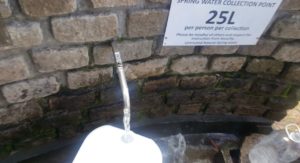
The water crisis in Cape Town is therefore clearly a real issue affecting not only its residents, but industry alike. Currently Cape Town is facing level 6B water restrictions, which allows its residence less than 50 litres of water usage a day. This has been the case for the past few months. Prior to that, the quota per person was in the region of 85 litres of water usage a day. With these restrictions, comes higher water costs in that, the more you use, the more you would pay as compared to periods before level 6B. This could be compared to the “polluter pays” principle when it comes to pollution. [caption id="attachment_5573" align="alignleft" width="300"]Water Quota Level 25 L Crises Water Quota at Newlands Springs Cape Town[/caption]

Water Outages and Problems

As with the electricity crisis not too long ago, Cape Town is now experiencing water outages. And in some areas, more than others. Certain areas experience blue coloured water coming from their taps, which may not be potable. Then there is the issue of the controversial water meters being installed for homes across Cape Town. In some areas, the communities opposed its installations citing faulty devices as a reason. When the device fails, residence is left without water until it is repaired, and sometimes not soon enough. This can be particularly annoying as the devices comes at a cost to the ratepayer. No matter how you look at it, water is still a vital resource on any level. We need it for our daily living. Industry requires it for their growth. And farms require it to ensure that there is food on our tables. But where does this leave us going forward? As can be seen, clearly there is a crisis, and costing us. Is there light at the end of the tunnel, or water at the bottom of the pit?

A right to water in South Africa

South Africa is an arid country with a small percentage of its rainfall available as surface water. It further has one of the lowest conversion ratios in the world. Each time we lose a water resource due to pollution or to poor conservation, we are driven closer to ‘water resource extinction’. It is therefore critically concerning that many of the Western Cape’s rivers are heavily polluted.

What does our Constitution say?

Section 24 of our country’s constitution states that “everyone has the right to an environment that is not harmful to their health or well-being.” The same section further states that “the environment is to be protected, for the benefit of present and future generations, through reasonable legislative and other measures that prevent pollution and ecological degradation; promote conservation; and secure ecologically sustainable development and use of natural resources while promoting justifiable economic and social development. Furthermore, section 27 of our Constitution states that “everyone has the right to have access to sufficient water.”

Alternative Sources of Water in Cape Town

Cape Town has now bought into the idea of desalination. There are currently three desalination plants in Cape Town, hoping to be up and running in a few weeks’ time. This however would not supply Cape Town with all its needed water should it be fully up and running. Then there is the issue of borehole water. Many residences and businesses have invested in drilling boreholes. This however comes at a cost and the water is not drinkable. It seems whatever the alternative sources are, it would cost the user a pretty penny. [caption id="attachment_5572" align="alignleft" width="300"]Water Crises Cape Town Newlands Springs Water Crisis Cape Town Newlands Springs[/caption]

Spring Water

The South African Breweries has a spring water collection point in Newlands Cape Town open to the public. Here residence may collect their water. There is also another collection point a few minutes’ walk away. With only five taps, and long queues, even being open twenty-four hours a day, would not support the entire Cape Town population. People may find it easier to just purchase water from the store. There are quite a few springs in Cape Town, but not all of them are open to the public. You will find people queuing in Muizenberg or collecting the water coming from the Mountain on Boyes Drive. Be that as it may, it would be clearly impracticable for a household of five people to collect their free water from springs, to alleviate a huge water bill. People work, and there are costs involved in transporting the water.

The way forward

[caption id="attachment_5574" align="alignleft" width="213"]Water Bottles Cape Town Crises Shortage 25 LWater Containers being filled.[/caption] Without pointing fingers, it is clear that something has gone wrong with regard to water management in the Western Cape. How can things change so quick? But we are where we are, and now with our eyes open. We cannot depend on government solely anymore to save us, we need to take positive action. If this means installing water saving devices, collecting water, or drilling boreholes; that is what we must do. In any event, our pockets will feel it. We wish the City success with their water desalination venture, and making use of groundwater, and truly wish the Winter season will fill up our dams. However, we all need to have systems and contingencies in place, as this crisis is one that may be around for some time. For environmental legal services, visit Envirolaws (Pty) Ltd. Happy World Water Day! The Our lawyer (Pty) Ltd Legal Team    
National Water Day Cape Town South Africa - Water Crises
National Water Day – Cape Town South Africa – Water Crisis

World Water Day

Yesterday (22 March 2018) was World Water Day. A day where the focus is on the importance of water and raising awareness on the issues surrounding it. The residence of the Western Cape, South Africa all to well know of the scarcity of water, as in the last few years, water has become in less supply and expensive. Dam levels have declined compared to previous years, and at the time of writing this article, there has been no substantial amount of rainfall positively predicted for the coming winter season.

What this tells us, is that both government and civil society need to work together to alleviate the water crisis in South Africa. This can be done by better water management and drilling into alternative sources of fresh water, to mention a few. Clearly some businesses have benefited from the crisis. People are purchasing bottled water in its gallons and the sale of 25 litre containers has sky rocketed. Almost every household owns a few containers. Then there is the Jojo tanks residence purchased and used to catch and store rain water, and water from water sources. All these costs money to the ratepayer.

As Our Lawyer (Pty) Ltd is based in Cape Town, we felt it fitting to use our legal expertise to write something on the water crisis in celebration of World Water Day. We too are feeling the crisis in our office building where water saving measures are in place.

Cape Town Water Crisis

The water crisis in Cape Town is therefore clearly a real issue affecting not only its residents, but industry alike. Currently Cape Town is facing level 6B water restrictions, which allows its residence less than 50 litres of water usage a day. This has been the case for the past few months. Prior to that, the quota per person was in the region of 85 litres of water usage a day. With these restrictions, comes higher water costs in that, the more you use, the more you would pay as compared to periods before level 6B. This could be compared to the “polluter pays” principle when it comes to pollution.

Water Quota Level 25 L Crises
Water Quota at Newlands Springs Cape Town

Water Outages and Problems

As with the electricity crisis not too long ago, Cape Town is now experiencing water outages. And in some areas, more than others. Certain areas experience blue coloured water coming from their taps, which may not be potable. Then there is the issue of the controversial water meters being installed for homes across Cape Town. In some areas, the communities opposed its installations citing faulty devices as a reason. When the device fails, residence is left without water until it is repaired, and sometimes not soon enough. This can be particularly annoying as the devices comes at a cost to the ratepayer.

No matter how you look at it, water is still a vital resource on any level. We need it for our daily living. Industry requires it for their growth. And farms require it to ensure that there is food on our tables. But where does this leave us going forward? As can be seen, clearly there is a crisis, and costing us. Is there light at the end of the tunnel, or water at the bottom of the pit?

A right to water in South Africa

South Africa is an arid country with a small percentage of its rainfall available as surface water. It further has one of the lowest conversion ratios in the world. Each time we lose a water resource due to pollution or to poor conservation, we are driven closer to ‘water resource extinction’. It is therefore critically concerning that many of the Western Cape’s rivers are heavily polluted.

What does our Constitution say?

Section 24 of our country’s constitution states that “everyone has the right to an environment that is not harmful to their health or well-being.” The same section further states that “the environment is to be protected, for the benefit of present and future generations, through reasonable legislative and other measures that prevent pollution and ecological degradation; promote conservation; and secure ecologically sustainable development and use of natural resources while promoting justifiable economic and social development. Furthermore, section 27 of our Constitution states that “everyone has the right to have access to sufficient water.”

Alternative Sources of Water in Cape Town

Cape Town has now bought into the idea of desalination. There are currently three desalination plants in Cape Town, hoping to be up and running in a few weeks’ time. This however would not supply Cape Town with all its needed water should it be fully up and running. Then there is the issue of borehole water. Many residences and businesses have invested in drilling boreholes. This however comes at a cost and the water is not drinkable. It seems whatever the alternative sources are, it would cost the user a pretty penny.
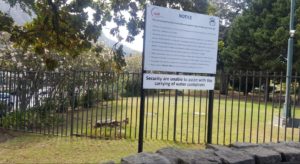
Water Crises Cape Town Newlands Springs
Water Crisis Cape Town Newlands Springs

Spring Water

The South African Breweries has a spring water collection point in Newlands Cape Town open to the public. Here residence may collect their water. There is also another collection point a few minutes’ walk away. With only five taps, and long queues, even being open twenty-four hours a day, would not support the entire Cape Town population. People may find it easier to just purchase water from the store.

There are quite a few springs in Cape Town, but not all of them are open to the public. You will find people queuing in Muizenberg or collecting the water coming from the Mountain on Boyes Drive. Be that as it may, it would be clearly impracticable for a household of five people to collect their free water from springs, to alleviate a huge water bill. People work, and there are costs involved in transporting the water.

The way forward
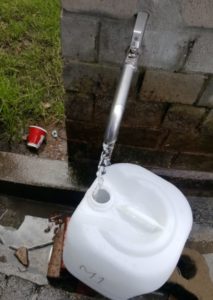
Water Bottles Cape Town Crises Shortage
25 LWater Containers being filled.

Without pointing fingers, it is clear that something has gone wrong with regard to water management in the Western Cape. How can things change so quick? But we are where we are, and now with our eyes open. We cannot depend on government solely anymore to save us, we need to take positive action. If this means installing water saving devices, collecting water, or drilling boreholes; that is what we must do. In any event, our pockets will feel it.

We wish the City success with their water desalination venture, and making use of groundwater, and truly wish the Winter season will fill up our dams. However, we all need to have systems and contingencies in place, as this crisis is one that may be around for some time. For environmental legal services, visit Envirolaws (Pty) Ltd.

Happy World Water Day! The Our lawyer (Pty) Ltd Legal Team


Related Post

The rights of parents to have contact with their children during the holiday season

It is that time of the year where schools are closed and most parents can take off work. This is either due to being allowed to take some leave days or the business itself is closed during that period. Whatever the reason, parents wants to spend time with their children during the holidays. And rightfully so. If parents are children live in the same home, there would not be much of a problem regarding contact. Or no problem at all. Parents and children would see each other every moring and before going to sleep. The challenge arise when parents and children do not live in the same home.

Parenal Responsibilities and Rights of parents

Alot has been written on the top of parental responsiblities and rights on this website. Extensive reference is made to relevant sections of the Children’s Act. However, to simply things, parental responsiblities and rights refers to the parental responsiblities and rights a parent has to look after a child. That can be in the form of food, shelter, clothing, education, visitation and so on. Basically, to form part of the child’s life in a meaningful way. Parental responsiblities and rights refers to  responsiblities and rights. They go hand in hand. You cannot say you have a right to have contact with your child, but not interested in execising your responsibility of feeding and clothing the child. The law does not work that way.

What should parents do if they are not allowed contact during the holidays?

Firstly, it is the right of the child to have contact with both parents during their school holidays. It not not neccessary the right of the parents as the law focuses of what is best for the child. Seconldy, it is the duly and responsiblity of both parents to ensure that they make it possible for both parents to have contact with the minor child. This is so, despite the issues and differences the parents might have.

What do you do if contact is frutrated?

If they cannot come to an agreement, then it is stronly recommened that they have the issue mediated as soon as possible. There are many people that can assist in mediaton. That can be someone you both trust and respect or a professional personal trained in family mediation. With regard to someone you trust and respect, it could be your religious leader, family elder or a trusted friend. Regarding professionals, that can be a social worker, lawyer, pyschologist or someone with mediation training. It is best to make use of some who has family law experience. However, it is not always neccessary depending on the issues at hand.

What do I do if mediation is now possible or unsuccessful?

Mediation will not always be successful. Howewer, depite it now always being successful, many benefits comes from a mediation session. For one, the parents would be one step closer in understanding what the issues are, at least from the other side. That can be invaluable as it often happens, couples usually speak or argue past each other when they are alone. In a mediation setting, whether formal or informal, the are forced to listen to each other. However, if the mediation session is unsuccessful or not possible, then the the law comes into play. Before going to court, you may want to consider seeing an attorney or advocate if you can afford it. They may consider the option of sending the other parent letter and try to resolve the matter out of court. Often it works and it is something you may wish to consider. However, if it is something you cannot afford, or it does not yield any noteworthy results, then approaching the court is your next option. This we deal with next.

When to approach the Court when it comes to care and contact disputes?

It does not benefit the child nor you to execise contact or care which is not adequate. In other words, if you should have more contact to your child, you should fight for it. The same applies to a parent who is abusing his or her parental responsibilities and rights. If you feel that they are doing so, the situation must changes which is in the child’s best interest. This could mean affording him or her last contact and care. Therefore, if speaking to the other party, mediation, or lawyer’s letter does not work, then taking it to a court of law is the only viable option. The Court is the upper guardian of all minor children. Therefore, it overrides the rights of both parents. It can therefore limit, take it away or increase or assign parental rigths. Ultimatley, the Court would decide what is best for the minor child involved.

Can I urgently have contact to my child during the holiday season?

If you are denied adequate contact rights to your minor child, you have the right to urgenly approach the court to relief. The High Court would need to be approach for urgenly relief. The Children’s Court may be able to assist, but not as fast as the High Court would. However, the High Court can be expensive if you are making use of attorney and advocates. Therefore, to avoid approaching the High Court and have your matter heard in the Children’s Court, do not wait until the last minuite to enforce your rights. Especially when it comes to end of year holdiday contact.    

What is a parenting plan?

A
parenting plan is a written document that outlines the duties and responsibilities of parents after a divorce. A well-drafted plan will reflect the best interests of the child. Visit schedules, visitation rights and custody rights forms the foundation of a parenting plan. A parenting plan can be seen as a shared legal contract or mutual agreement between parents after a divorce. [caption id="attachment_4539" align="alignleft" width="300"] Call our law offices on: 0211110090
Email us at: [email protected][/caption]

Are parenting plans legally binding?

Parenting plans are not necessary legally enforceable. Circumstantially, if a parent fails to comply with an agreement, the court will not intervene.  A parenting plan is to find a common ground between parents to reinforce their rights and responsibilities after divorce. [caption id="attachment_4541" align="alignleft" width="300"] Call our law offices on: 0211110090
Email us at: [email protected][/caption]

What to include in a parenting plan

Parenting plans form part of Family Law. Your family legal expert should be able to guide you through the process of drafting your parenting plan. At Our Lawyer Pty Ltd, the family legal expert has years of professional experience in legal drafting. [caption id="attachment_4544" align="alignleft" width="300"] Call our law offices on: 0211110090
Email us at: [email protected][/caption] Our law offices operate by appointment only so feel free to have your online appointment made for a legal consultation. In the grander scheme of things, the legal expert will be advising you through the process. Both parents will be able to sit down with the legal expert to discuss a way forward in their child/children’s lives after divorce.

Parenting plan in terms of the Children’s Act

The Children’s Act reflects the child’s rights and best interest of the child which works in close collaboration parenting plans. Meanwhile, the legal expert carries a wealth of legal expertise which comes in handy when drafting your parenting plan professionally. [caption id="attachment_4545" align="alignleft" width="300"] Call our law offices on: 0211110090
Email us at: [email protected][/caption] Call our offices today and have your legal appointment booked online immediately. Our Lawyer Pty Ltd is highly accommodating towards its clients and believe in making life easier for its clients. This is why we have decided to initiate an online appointment system as well as an online platform in which you can share your thoughts and post your legal questions. Connect with us today! Get your professional legal parenting drafted today.  

Do you require a video legal advice consultation?

Click here and schedule one today!