Top tips from a Senior Family Law Advocate on how to deal with your Child Custody matter in the Zwelitsha Children’s Court


Family law legal matters can be very stressful. This is so whether you live in Zwelitsha or any other city in South Africa. Especially so if you have no idea how the legal processes work. It is one thing to know that you are entitled to child support, but it is a totally different matter to know the law and procedure on how to claim child support. Luckily in child maintenance matters, the maintenance court is there to assist you in completing the application form. However, many times that is not enough. Especially so if the other parent has a lawyer and knows how to present the case for his or her client.

This article, however, deals with some top tips in care and contact or custody matters in the Children’s Court in Zwelitsha. It would explain the processes involved and advise on how to be best prepared for your matter. This advice is applicable whether you live in Zwelitsha or any other city in South Africa.

What to do before visiting the Zwelitsha Children’s Court

Before you approach the Children’s Court in Zwelitsha, first try to resolve the issues with the other parent. Therefore, if you want more contact with your child and the other parent is refusing, try to resolve the matter first with that parent. If that does not work, try mediation. The mediator can be anyone, from a trusted mutual friend, priest, or other religious leaders, or a professional like an attorney, psychologist, or the office of the Family Advocate. Zwelitsha has many professionals that can assist you in this regard. If resolving the matter by yourselves is not possible, or mediation fails, then we suggest you approach the Zwelitsha Children’s Court for assistance.

TIP: Focus on getting someone neutral to assist in mediating your matter. Organisations like FAMSA and FAMAC can be of assistance. Google them.

Approaching the Zwelitsha Children’s Court

The Zwelitsha Children’s Court should be approached if it is the closest Children’s Court to you. You need to verify with the Zwelitsha Children’s Court that you fall under their area of jurisdiction. If not, they would direct you to which Children’s Court is applicable to you.

Once you arrive at the Zwelitsha Children’s Court, they will provide you with a form headed “Bringing Matter to Court in Terms of Section 53 Children’s Act, 2005 (Act no. 38 of 2005) Regulation Relating to Children’s Court and International Child Abduction, 2008 [Regulation 6]. This form is also called Form 2.

In this form, you will provide all your particulars and that of the child or children and the other parent. The sections in the form are as follows:

  • PART A: PARTICULARS OF CHILD(REN)
  • PART B: PARTICULARS OF *CHILD WHO IS AFFECTED BY OR INVOLVED IN THE MATTER/PERSON *ACTING IN THE INTEREST OF THE CHILD/*ON BEHALF OF THE CHILD WHO CANNOT ACT IN HIS/HER OWN NAME/ *MEMBER OF A GROUP OF CLASS OF CHILDREN/*IN THE PUBLIC INTEREST (SECTION 53(2)
  • PART C: PARTICULARS OF PERSONS HAVING AN INTEREST IN THE MATTER
  • PART D: PARTICULARS OF MATTER

In part D, the following is stated which you need to provide in the form:

  • Nature of matter brought to Court: (Please give full details of the matter e.g., registration/amendment of parenting plans, removal of child to safe care, children in need of care and protection, placement in youth care centers, adoption etc.
  • Documents: Are there any documents relating to the matter? (If so please attach)

Once you have completed the form and attached the relevant documents to it, you must take it to a commissioner of Oaths to have it commissioned. It does not have to be in Zwelitsha.

TIP: Draft a separate affidavit explaining your case. Outline some background information and reasons why the Court should give you what you request. Attach it to Form 2.

Processing your Application at the Zwelitsha Children’s Court

Once you complete the Form A and submit it to the Clerk of the Zwelitsha Children’s Court, they will process it and allocate it a case number or reference number. The Clerk of the Court would then allocate a date to the matter and advise the parties accordingly when the court date is. Please note that some courts follow a different process for processing the application and informing the parties of the court date. Please enquire from the Court when making the application what process they follow.

TIP: Obtain the contact details of the Court for you to contact them to obtain the Court date or other information. Ask for their contact number and email address.

Appearing in the Zwelitsha Children’s Court

When notified of the Court date, both you and the other parent should attend. If you are making use of a lawyer (Advocate or Attorney), inform them timeously of the date. Depending on the Court, you may first see the Clerk or go directly to the Magistrate. The Children’s Court would do its best to try to resolve the matter. If the parents cannot come to an agreement, the Children’s Court may postpone the matter for either of the following:

  • Get a social worker involved in the matter;
  • Appoint a legal representative for the minor child;
  • Implement interim care and contact arrangements;
  • Having the parties attempt to agree on a parenting plan;
  •  

In serious matters, the Court may remove the minor child from both parents and place the child in foster care. The powers of the Children’s Court are extensive. It will, however, focus on what is in the child’s best interests.

TIP: Be as vocal as possible. Do not expect the Court to be understanding of your case or be on your side. It is your duty to explain your case and provide the Court with all the relevant information they require for them to make a fair decision.

Finalising the matter in the Zwelitsha Children’s Court

Once the Zwelitsha Children’s Court has enough information to make a final decision, it will do so. Depending on the facts of the matter, that could either be making a Parenting Plan, an Order of the Court or a final care and contact Order. The Court may even make further interim orders, where the parties are to return to Court after a few months, or a year later.

TIP: Do not agree to something just because the social worker, a lawyer, or the Court suggest it. You need to be happy with what is decided.

The above Zwelitsha Children’s Court Application tips should apply to the following provinces and cities:

Eastern Cape:

Alice, Butterworth, East London, Graaff-Reinet, Grahamstown, King William’s Town, Mthatha

Port Elizabeth, Queenstown, Uitenhage, Zwelitsha

Free State:

Bethlehem. Bloemfontein, Jagersfontein, Kroonstad, Odendaalsrus, Parys, Phuthaditjhaba, Sasolburg, Virginia, Welkom

Gauteng:

Benoni, Boksburg, Brakpan, Carletonville, Germiston, Johannesburg, Krugersdorp, Pretoria, Randburg, Randfontein, Roodepoort, Soweto, Springs, Vanderbijlpark, Vereeniging

KwaZulu-Natal:

Durban, Empangeni, Ladysmith, Newcastle, Pietermaritzburg, Pinetown, Ulundi, Umlazi

Limpopo:

Giyani, Lebowakgomo, Musina, Phalaborwa, Polokwane, Seshego, Sibasa, Thabazimbi

Mpumalanga:

Emalahleni, Nelspruit, Secunda, North West, Klerksdorp, Mahikeng, Mmabatho, Potchefstroom, Rustenburg, Northern Cape, Kimberley, Kuruman, Port Nolloth

Western Cape:

Bellville, Zwelitsha, Constantia, George, Hopefield, Oudtshoorn, Paarl, Simon’s Town, Stellenbosch, Swellendam, Worcester

Top tips from a Senior Family Law Advocate on how to deal with your Child Custody matter in the Zwelitsha Children’s Court


Family law legal matters can be very stressful. This is so whether you live in Zwelitsha or any other city in South Africa. Especially so if you have no idea how the legal processes work. It is one thing to know that you are entitled to child support, but it is a totally different matter to know the law and procedure on how to claim child support. Luckily in child maintenance matters, the maintenance court is there to assist you in completing the application form. However, many times that is not enough. Especially so if the other parent has a lawyer and knows how to present the case for his or her client.

This article, however, deals with some top tips in care and contact or custody matters in the Children’s Court in Zwelitsha. It would explain the processes involved and advise on how to be best prepared for your matter. This advice is applicable whether you live in Zwelitsha or any other city in South Africa.

What to do before visiting the Zwelitsha Children’s Court

Before you approach the Children’s Court in Zwelitsha, first try to resolve the issues with the other parent. Therefore, if you want more contact with your child and the other parent is refusing, try to resolve the matter first with that parent. If that does not work, try mediation. The mediator can be anyone, from a trusted mutual friend, priest, or other religious leaders, or a professional like an attorney, psychologist, or the office of the Family Advocate. Zwelitsha has many professionals that can assist you in this regard. If resolving the matter by yourselves is not possible, or mediation fails, then we suggest you approach the Zwelitsha Children’s Court for assistance.

TIP: Focus on getting someone neutral to assist in mediating your matter. Organisations like FAMSA and FAMAC can be of assistance. Google them.

Approaching the Zwelitsha Children’s Court

The Zwelitsha Children’s Court should be approached if it is the closest Children’s Court to you. You need to verify with the Zwelitsha Children’s Court that you fall under their area of jurisdiction. If not, they would direct you to which Children’s Court is applicable to you.

Once you arrive at the Zwelitsha Children’s Court, they will provide you with a form headed “Bringing Matter to Court in Terms of Section 53 Children’s Act, 2005 (Act no. 38 of 2005) Regulation Relating to Children’s Court and International Child Abduction, 2008 [Regulation 6]. This form is also called Form 2.

In this form, you will provide all your particulars and that of the child or children and the other parent. The sections in the form are as follows:

  • PART A: PARTICULARS OF CHILD(REN)
  • PART B: PARTICULARS OF *CHILD WHO IS AFFECTED BY OR INVOLVED IN THE MATTER/PERSON *ACTING IN THE INTEREST OF THE CHILD/*ON BEHALF OF THE CHILD WHO CANNOT ACT IN HIS/HER OWN NAME/ *MEMBER OF A GROUP OF CLASS OF CHILDREN/*IN THE PUBLIC INTEREST (SECTION 53(2)
  • PART C: PARTICULARS OF PERSONS HAVING AN INTEREST IN THE MATTER
  • PART D: PARTICULARS OF MATTER

In part D, the following is stated which you need to provide in the form:

  • Nature of matter brought to Court: (Please give full details of the matter e.g., registration/amendment of parenting plans, removal of child to safe care, children in need of care and protection, placement in youth care centers, adoption etc.
  • Documents: Are there any documents relating to the matter? (If so please attach)

Once you have completed the form and attached the relevant documents to it, you must take it to a commissioner of Oaths to have it commissioned. It does not have to be in Zwelitsha.

TIP: Draft a separate affidavit explaining your case. Outline some background information and reasons why the Court should give you what you request. Attach it to Form 2.

Processing your Application at the Zwelitsha Children’s Court

Once you complete the Form A and submit it to the Clerk of the Zwelitsha Children’s Court, they will process it and allocate it a case number or reference number. The Clerk of the Court would then allocate a date to the matter and advise the parties accordingly when the court date is. Please note that some courts follow a different process for processing the application and informing the parties of the court date. Please enquire from the Court when making the application what process they follow.

TIP: Obtain the contact details of the Court for you to contact them to obtain the Court date or other information. Ask for their contact number and email address.

Appearing in the Zwelitsha Children’s Court

When notified of the Court date, both you and the other parent should attend. If you are making use of a lawyer (Advocate or Attorney), inform them timeously of the date. Depending on the Court, you may first see the Clerk or go directly to the Magistrate. The Children’s Court would do its best to try to resolve the matter. If the parents cannot come to an agreement, the Children’s Court may postpone the matter for either of the following:

  • Get a social worker involved in the matter;
  • Appoint a legal representative for the minor child;
  • Implement interim care and contact arrangements;
  • Having the parties attempt to agree on a parenting plan;
  •  

In serious matters, the Court may remove the minor child from both parents and place the child in foster care. The powers of the Children’s Court are extensive. It will, however, focus on what is in the child’s best interests.

TIP: Be as vocal as possible. Do not expect the Court to be understanding of your case or be on your side. It is your duty to explain your case and provide the Court with all the relevant information they require for them to make a fair decision.

Finalising the matter in the Zwelitsha Children’s Court

Once the Zwelitsha Children’s Court has enough information to make a final decision, it will do so. Depending on the facts of the matter, that could either be making a Parenting Plan, an Order of the Court or a final care and contact Order. The Court may even make further interim orders, where the parties are to return to Court after a few months, or a year later.

TIP: Do not agree to something just because the social worker, a lawyer, or the Court suggest it. You need to be happy with what is decided.

The above Zwelitsha Children’s Court Application tips should apply to the following provinces and cities:

Eastern Cape:

Alice, Butterworth, East London, Graaff-Reinet, Grahamstown, King William’s Town, Mthatha

Port Elizabeth, Queenstown, Uitenhage, Zwelitsha

Free State:

Bethlehem. Bloemfontein, Jagersfontein, Kroonstad, Odendaalsrus, Parys, Phuthaditjhaba, Sasolburg, Virginia, Welkom

Gauteng:

Benoni, Boksburg, Brakpan, Carletonville, Germiston, Johannesburg, Krugersdorp, Pretoria, Randburg, Randfontein, Roodepoort, Soweto, Springs, Vanderbijlpark, Vereeniging

KwaZulu-Natal:

Durban, Empangeni, Ladysmith, Newcastle, Pietermaritzburg, Pinetown, Ulundi, Umlazi

Limpopo:

Giyani, Lebowakgomo, Musina, Phalaborwa, Polokwane, Seshego, Sibasa, Thabazimbi

Mpumalanga:

Emalahleni, Nelspruit, Secunda, North West, Klerksdorp, Mahikeng, Mmabatho, Potchefstroom, Rustenburg, Northern Cape, Kimberley, Kuruman, Port Nolloth

Western Cape:

Bellville, Zwelitsha, Constantia, George, Hopefield, Oudtshoorn, Paarl, Simon’s Town, Stellenbosch, Swellendam, Worcester

Related Post

What are the general legal problems people seek legal assistance for in South Africa? Please provide explanations – Advocate Abduroaf

  1. Divorce and Family Law:

    • Explanation: Family law matters, including divorce, child custody, spousal support, and domestic violence cases, are frequently searched for legal services in South Africa. People often seek assistance in navigating the legal processes involved in family-related matters.
  2. Labour Law:

    • Explanation: Labour law in South Africa addresses issues related to the employer-employee relationship. Common concerns include unfair dismissals, workplace discrimination, collective labour disputes, and compliance with employment regulations.
  3. Property and Real Estate Law:

    • Explanation: Given the significance of property transactions, individuals often seek legal guidance in matters related to buying, selling, or leasing property. This includes addressing issues like property transfers, title deeds, and land disputes.
  4. Criminal Defence:

    • Explanation: Criminal defence services are in demand for individuals facing criminal charges. Attorneys and Advocates help clients navigate the criminal justice system, provide legal representation in court, and strive to protect their rights.
  5. Wills and Estate Planning:

    • Explanation: Estate planning services, including the creation of wills and trusts, are sought after by individuals looking to secure the orderly distribution of their assets after death. This involves planning for the management and inheritance of estates.
  6. Personal Injury Law:

    • Explanation: Legal assistance in personal injury cases, such as motor vehicle accidents, medical malpractice, and workplace injuries, is commonly sought to pursue compensation for damages resulting from negligence.
  7. Commercial and Business Law:

    • Explanation: Businesses seek legal services for various matters, including contract drafting and disputes, business formation, compliance with commercial laws, and resolution of business-related legal issues.
  8. Debt Collection and Bankruptcy:

    • Explanation: In cases of debt collection or financial distress, individuals and businesses may seek legal help in debt recovery or navigating the bankruptcy process to address financial challenges.

[caption id="attachment_5575" align="alignleft" width="300"]National Water Day Cape Town South Africa - Water Crises National Water Day – Cape Town South Africa – Water Crisis[/caption]

World Water Day

Yesterday (22 March 2018) was World Water Day. A day where the focus is on the importance of water and raising awareness on the issues surrounding it. The residence of the Western Cape, South Africa all to well know of the scarcity of water, as in the last few years, water has become in less supply and expensive. Dam levels have declined compared to previous years, and at the time of writing this article, there has been no substantial amount of rainfall positively predicted for the coming winter season. What this tells us, is that both government and civil society need to work together to alleviate the water crisis in South Africa. This can be done by better water management and drilling into alternative sources of fresh water, to mention a few. Clearly some businesses have benefited from the crisis. People are purchasing bottled water in its gallons and the sale of 25 litre containers has sky rocketed. Almost every household owns a few containers. Then there is the Jojo tanks residence purchased and used to catch and store rain water, and water from water sources. All these costs money to the ratepayer. As Our Lawyer (Pty) Ltd is based in Cape Town, we felt it fitting to use our legal expertise to write something on the water crisis in celebration of World Water Day. We too are feeling the crisis in our office building where water saving measures are in place.

Cape Town Water Crisis

The water crisis in Cape Town is therefore clearly a real issue affecting not only its residents, but industry alike. Currently Cape Town is facing level 6B water restrictions, which allows its residence less than 50 litres of water usage a day. This has been the case for the past few months. Prior to that, the quota per person was in the region of 85 litres of water usage a day. With these restrictions, comes higher water costs in that, the more you use, the more you would pay as compared to periods before level 6B. This could be compared to the “polluter pays” principle when it comes to pollution. [caption id="attachment_5573" align="alignleft" width="300"]Water Quota Level 25 L Crises Water Quota at Newlands Springs Cape Town[/caption]

Water Outages and Problems

As with the electricity crisis not too long ago, Cape Town is now experiencing water outages. And in some areas, more than others. Certain areas experience blue coloured water coming from their taps, which may not be potable. Then there is the issue of the controversial water meters being installed for homes across Cape Town. In some areas, the communities opposed its installations citing faulty devices as a reason. When the device fails, residence is left without water until it is repaired, and sometimes not soon enough. This can be particularly annoying as the devices comes at a cost to the ratepayer. No matter how you look at it, water is still a vital resource on any level. We need it for our daily living. Industry requires it for their growth. And farms require it to ensure that there is food on our tables. But where does this leave us going forward? As can be seen, clearly there is a crisis, and costing us. Is there light at the end of the tunnel, or water at the bottom of the pit?

A right to water in South Africa

South Africa is an arid country with a small percentage of its rainfall available as surface water. It further has one of the lowest conversion ratios in the world. Each time we lose a water resource due to pollution or to poor conservation, we are driven closer to ‘water resource extinction’. It is therefore critically concerning that many of the Western Cape’s rivers are heavily polluted.

What does our Constitution say?

Section 24 of our country’s constitution states that “everyone has the right to an environment that is not harmful to their health or well-being.” The same section further states that “the environment is to be protected, for the benefit of present and future generations, through reasonable legislative and other measures that prevent pollution and ecological degradation; promote conservation; and secure ecologically sustainable development and use of natural resources while promoting justifiable economic and social development. Furthermore, section 27 of our Constitution states that “everyone has the right to have access to sufficient water.”

Alternative Sources of Water in Cape Town

Cape Town has now bought into the idea of desalination. There are currently three desalination plants in Cape Town, hoping to be up and running in a few weeks’ time. This however would not supply Cape Town with all its needed water should it be fully up and running. Then there is the issue of borehole water. Many residences and businesses have invested in drilling boreholes. This however comes at a cost and the water is not drinkable. It seems whatever the alternative sources are, it would cost the user a pretty penny. [caption id="attachment_5572" align="alignleft" width="300"]Water Crises Cape Town Newlands Springs Water Crisis Cape Town Newlands Springs[/caption]
Spring Water

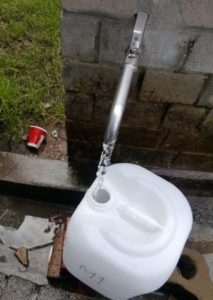
The South African Breweries has a spring water collection point in Newlands Cape Town open to the public. Here residence may collect their water. There is also another collection point a few minutes’ walk away. With only five taps, and long queues, even being open twenty-four hours a day, would not support the entire Cape Town population. People may find it easier to just purchase water from the store. There are quite a few springs in Cape Town, but not all of them are open to the public. You will find people queuing in Muizenberg or collecting the water coming from the Mountain on Boyes Drive. Be that as it may, it would be clearly impracticable for a household of five people to collect their free water from springs, to alleviate a huge water bill. People work, and there are costs involved in transporting the water.

The way forward

[caption id="attachment_5574" align="alignleft" width="213"]Water Bottles Cape Town Crises Shortage 25 LWater Containers being filled.[/caption] Without pointing fingers, it is clear that something has gone wrong with regard to water management in the Western Cape. How can things change so quick? But we are where we are, and now with our eyes open. We cannot depend on government solely anymore to save us, we need to take positive action. If this means installing water saving devices, collecting water, or drilling boreholes; that is what we must do. In any event, our pockets will feel it. We wish the City success with their water desalination venture, and making use of groundwater, and truly wish the Winter season will fill up our dams. However, we all need to have systems and contingencies in place, as this crisis is one that may be around for some time. For environmental legal services, visit Envirolaws (Pty) Ltd. Happy World Water Day! The Our lawyer (Pty) Ltd Legal Team    

What is child maintenance / child support?

The terms “child maintenance” or “child support” is pretty much self-explanatory. To put it simply, it is when both parents sees to the needs and well-being of their child / children. Needs can be classified as food, clothes, education, medical expenses and other general maintenance of the child’s living costs.

Child Maintenance Law

This is where the guidance and help of a
family law legal professional comes in handy. To understand the rules and regulations that govern child maintenance/child support, expert legal advice is required from a professional. The Child Support Act is there to ensure that both parents fulfill their legal obligations towards their child/children. In other words, the Act ensures that parents continue taking care of their children even after divorce. Child Maintenance includes the basic necessities such as:
  • Shelter
  • Clothing
  • Medical Care
  • Schooling
  • Food
Any legal executions regarding maintenance shall be carried out in accordance with the Child Maintenance Act.

Maintenance Court Procedure

Find out where about is the closest magistrates’ court in your area and pay them a visit. It is however, important to bring along the necessary documents such as:
  • Birth certificate of your child/children.
  • Your identity document.
  • Proof of residence.
  • A divorce settlement.
  • Proof of your monthly income and expenses.
  • The personal details of the parent required to pay maintenance such as their name, surname physical and work address.
  • Copy of your bank statement.

Maintenance Court Procedure

When undergoing the process of claiming maintenance, you will have to fill in a detailed form stipulated by the Magistrate’s Court. This form shall request all details regarding your income and expenses. The form will cover essential expenses such as clothing, food, medical expenses and other relevant bills. Lighter expenses such as entertainment, pocket money and so forth, are also included in the “expenses” section. Expenses of parents and the child are however, listed separately. The court however, will take a number of factors into consideration when stipulating the amount of maintenance that should be paid. Both parent’s income will be analysed and the court’s decision will be based accordingly.

Child maintenance calculator

Many people do not proceed with claiming child maintenance because they do not know if they have a case. This is minimized by making use of the calculator which would assist you with the following:
  • To have an idea on how much maintenance you should be receiving from the other parent of your child;
  • How much maintenance you should be paying; and
  • Assist in reaching a mutual agreement with the other parent due to having a more accurate idea of how much either parent should be contributing to the child or children’s living expenses.
Download your free child maintenance calculator today. Start calculating today and find out how much to claim or pay with our free child maintenance calculator.

Child Maintenance office numbers

Our Lawyer Pty Ltd offers a range of family law legal services for your convenience. You can find our office in the heart of the buzzing CBD at Suit 702, 7th Floor, The Pinnacle, corner of Strand and burg Street. Feel free to visit us at our offices in a safe, central setting and enjoy professional, confidential, legal consultations at its best. Call our legal offices today and have your legal appointment booked online for a legal consultation in child maintenance. Our Lawyer Pty Ltd is highly accommodating towards its clients and believe in making life easier for its clients. This is why we have decided to initiate an online appointment system as well as an online platform in which you can share your thoughts and post your legal questions. Connect with us today!        

Do you require a video legal advice consultation?

Click here and schedule one today!