How to find the best advocate or attorney for legal services in South Africa?
Finding the best legal practitioners for you is not always straightforward. However, with some research and attention to detail, you will find the right person for the job sooner than later. Advocates and attorneys both assist their clients with legal matters. Legal issues vary, and not all advocates and attorneys do the same type of work. And then again, not all attorneys are the same, and not all advocates are the same. You should be familiar with this if you intend to use the top or best attorney or advocate for your matter.
Type of Attorney in South Africa
When we speak about attorneys, we need to differentiate them from lawyers in general. A lawyer can be someone who works for the government or in a corporation and who only advises on legal issues. They would not represent their employee at work, nor would they ever set foot in a courtroom. However, attorneys, on the other hand, usually represent clients in legal matters. The matter can relate to employment issues, family law issues, or debt collection. Therefore, the distinct difference between an attorney, and a lawyer who is not an attorney, is that the attorney would represent members of the public in legal matters. You also find attorneys who are conveyancers and notaries. They are specialists. Therefore, to obtain the best attorney for you, make sure you know that not all lawyers are attorneys and that not all attorneys do the same work.
Type of Advocates in South Africa
Advocates usually represent clients in legal matters. When you speak about and advocate, you usually refer to matters connected with the Court. You also have an advocate doing office work, but then that type of work can be done by an attorney or lawyer. In South Africa, we have two types of advocates. They are the referral advocate and then the Trust Account Advocate. The Trust Account Advocate can take work directly from members of the public. Basically, the same as an attorney can. The client would pay a deposit into the Trust Account Advocate’s Trust Banking Account. Advocate Muhammad Abduroaf is a Trust Account Advocate. He can therefore take instructions directly from members of the public. If you wish to instruct him on a legal matter, feel free to do so. If, however, he is unable to be of assistance, he will do his best to obtain a lawyer that suits your needs. [caption id="attachment_10671" align="alignnone" width="300"] Advocate Muhammad Abduroaf – Trust Account Lawyer- Best Legal Law Practitioners (Advocate Attorney) Child Custody Maintenance Contact Divorce Relocation Passport Consent High Court Cape Town[/caption] [caption id="attachment_10670" align="alignnone" width="300"] Advocate Muhammad Abduroaf – Trust Account Lawyer- Best Legal Law Practitioners (Advocate Attorney) Child Custody Maintenance Contact Divorce Relocation Passport Consent High Court Cape Town[/caption] [caption id="attachment_10669" align="alignnone" width="300"] Advocate Muhammad Abduroaf – Trust Account Lawyer- Best Legal Law Practitioners (Advocate Attorney) Child Custody Maintenance Contact Divorce Relocation Passport Consent High Court Cape Town[/caption] [caption id="attachment_10668" align="alignnone" width="300"] Advocate Muhammad Abduroaf – Trust Account Lawyer- Best Legal Law Practitioners (Advocate Attorney) Child Custody Maintenance Contact Divorce Relocation Passport Consent High Court Cape Town[/caption] [caption id="attachment_10667" align="alignnone" width="300"] Advocate Muhammad Abduroaf – Trust Account Lawyer- Best Legal Law Practitioners (Advocate Attorney) Child Custody Maintenance Contact Divorce Relocation Passport Consent High Court Cape Town[/caption] [caption id="attachment_10666" align="alignnone" width="300"] Advocate Muhammad Abduroaf – Trust Account Lawyer- Best Legal Law Practitioners (Advocate Attorney) Child Custody Maintenance Contact Divorce Relocation Passport Consent High Court Cape Town[/caption] [caption id="attachment_10665" align="alignnone" width="300"] Advocate Muhammad Abduroaf – Trust Account Lawyer- Best Legal Law Practitioners (Advocate Attorney) Child Custody Maintenance Contact Divorce Relocation Passport Consent High Court Cape Town[/caption] [caption id="attachment_10664" align="alignnone" width="300"] Advocate Muhammad Abduroaf – Trust Account Lawyer- Best Legal Law Practitioners (Advocate Attorney) Child Custody Maintenance Contact Divorce Relocation Passport Consent High Court Cape Town[/caption] [caption id="attachment_10663" align="alignnone" width="300"] Advocate Muhammad Abduroaf – Trust Account Lawyer- Best Legal Law Practitioners (Advocate Attorney) Child Custody Maintenance Contact Divorce Relocation Passport Consent High Court Cape Town[/caption] [caption id="attachment_10662" align="alignnone" width="300"] Advocate Muhammad Abduroaf – Trust Account Lawyer- Best Legal Law Practitioners (Advocate Attorney) Child Custody Maintenance Contact Divorce Relocation Passport Consent High Court Cape Town[/caption] [caption id="attachment_10661" align="alignnone" width="300"] Advocate Muhammad Abduroaf – Trust Account Lawyer- Best Legal Law Practitioners (Advocate Attorney) Child Custody Maintenance Contact Divorce Relocation Passport Consent High Court Cape Town[/caption] [caption id="attachment_10660" align="alignnone" width="300"] Advocate Muhammad Abduroaf – Trust Account Lawyer- Best Legal Law Practitioners (Advocate Attorney) Child Custody Maintenance Contact Divorce Relocation Passport Consent High Court Cape Town[/caption] [caption id="attachment_10659" align="alignnone" width="300"] Advocate Muhammad Abduroaf – Trust Account Lawyer- Best Legal Law Practitioners (Advocate Attorney) Child Custody Maintenance Contact Divorce Relocation Passport Consent High Court Cape Town[/caption] [caption id="attachment_10658" align="alignnone" width="300"] Advocate Muhammad Abduroaf – Trust Account Lawyer- Best Legal Law Practitioners (Advocate Attorney) Child Custody Maintenance Contact Divorce Relocation Passport Consent High Court Cape Town[/caption] [caption id="attachment_10657" align="alignnone" width="300"] Advocate Muhammad Abduroaf – Trust Account Lawyer- Best Legal Law Practitioners (Advocate Attorney) Child Custody Maintenance Contact Divorce Relocation Passport Consent High Court Cape Town[/caption] [caption id="attachment_10656" align="alignnone" width="300"] Advocate Muhammad Abduroaf – Trust Account Lawyer- Best Legal Law Practitioners (Advocate Attorney) Child Custody Maintenance Contact Divorce Relocation Passport Consent High Court Cape Town[/caption] [caption id="attachment_10655" align="alignnone" width="300"] Advocate Muhammad Abduroaf – Trust Account Lawyer- Best Legal Law Practitioners (Advocate Attorney) Child Custody Maintenance Contact Divorce Relocation Passport Consent High Court Cape Town[/caption] [caption id="attachment_10654" align="alignnone" width="300"] Advocate Muhammad Abduroaf – Trust Account Lawyer- Best Legal Law Practitioners (Advocate Attorney) Child Custody Maintenance Contact Divorce Relocation Passport Consent High Court Cape Town[/caption] [caption id="attachment_10653" align="alignnone" width="300"] Advocate Muhammad Abduroaf – Trust Account Lawyer- Best Legal Law Practitioners (Advocate Attorney) Child Custody Maintenance Contact Divorce Relocation Passport Consent High Court Cape Town[/caption] [caption id="attachment_10652" align="alignnone" width="300"] Advocate Muhammad Abduroaf – Trust Account Lawyer- Best Legal Law Practitioners (Advocate Attorney) Child Custody Maintenance Contact Divorce Relocation Passport Consent High Court Cape Town[/caption] [caption id="attachment_10651" align="alignnone" width="300"] Advocate Muhammad Abduroaf – Trust Account Lawyer- Best Legal Law Practitioners (Advocate Attorney) Child Custody Maintenance Contact Divorce Relocation Passport Consent High Court Cape Town[/caption] [caption id="attachment_10650" align="alignnone" width="300"] Advocate Muhammad Abduroaf – Trust Account Advocate – Best Legal Law Practitioners (Advocate Attorney) Child Custody Maintenance Contact Divorce Relocation Passport Consent[/caption] [caption id="attachment_10649" align="alignnone" width="300"] Advocate Muhammad Abduroaf – Trust Account Advocate – Best Legal Law Practitioners (Advocate Attorney) Child Custody Maintenance Contact Divorce Relocation Passport Consent[/caption] [caption id="attachment_10648" align="alignnone" width="300"] Advocate Muhammad Abduroaf – Trust Account Advocate – Best Legal Law Practitioners (Advocate Attorney) Child Custody Maintenance Contact Divorce Relocation Passport Consent[/caption] [caption id="attachment_10647" align="alignnone" width="300"] Advocate Muhammad Abduroaf – Trust Account Advocate – Best Legal Law Practitioners (Advocate Attorney) Child Custody Maintenance Contact Divorce Relocation Passport Consent[/caption] [caption id="attachment_10646" align="alignnone" width="300"] Advocate Muhammad Abduroaf – Trust Account Advocate – Best Legal Law Practitioners (Advocate Attorney) Child Custody Maintenance Contact Divorce Relocation Passport Consent[/caption] [caption id="attachment_10645" align="alignnone" width="300"] Advocate Muhammad Abduroaf – Trust Account Advocate – Best Legal Law Practitioners (Advocate Attorney) Child Custody Maintenance Contact Divorce Relocation Passport Consent[/caption] [caption id="attachment_10644" align="alignnone" width="300"] Advocate Muhammad Abduroaf – Trust Account Advocate – Best Legal Law Practitioners (Advocate Attorney) Child Custody Maintenance Contact Divorce Relocation Passport Consent[/caption] [caption id="attachment_10643" align="alignnone" width="300"] Advocate Muhammad Abduroaf – Trust Account Advocate – Best Legal Law Practitioners (Advocate Attorney) Child Custody Maintenance Contact Divorce Relocation Passport Consent[/caption] [caption id="attachment_10642" align="alignnone" width="300"] Advocate Muhammad Abduroaf – Trust Account Advocate – Best Legal Law Practitioners (Advocate Attorney) Child Custody Maintenance Contact Divorce Relocation Passport Consent[/caption] [caption id="attachment_10641" align="alignnone" width="300"] Advocate Muhammad Abduroaf – Trust Account Advocate – Best Legal Law Practitioners (Advocate Attorney) Child Custody Maintenance Contact Divorce Relocation Passport Consent[/caption] [caption id="attachment_10640" align="alignnone" width="300"] Advocate Muhammad Abduroaf – Trust Account Advocate – Best Legal Law Practitioners (Advocate Attorney) Child Custody Maintenance Contact Divorce Relocation Passport Consent[/caption] [caption id="attachment_10639" align="alignnone" width="300"] Advocate Muhammad Abduroaf – Trust Account Advocate – Best Legal Law Practitioners (Advocate Attorney) Child Custody Maintenance Contact Divorce Relocation Passport Consent[/caption] [caption id="attachment_10638" align="alignnone" width="300"] Advocate Muhammad Abduroaf – Trust Account Advocate – Best Legal Law Practitioners (Advocate Attorney) Child Custody Maintenance Contact Divorce Relocation Passport Consent[/caption] [caption id="attachment_10637" align="alignnone" width="300"] Advocate Muhammad Abduroaf – Trust Account Advocate – Best Legal Law Practitioners (Advocate Attorney) Child Custody Maintenance Contact Divorce Relocation Passport Consent[/caption] [caption id="attachment_10636" align="alignnone" width="300"] Advocate Muhammad Abduroaf – Trust Account Advocate – Best Legal Law Practitioners (Advocate Attorney) Child Custody Maintenance Contact Divorce Relocation Passport Consent[/caption] [caption id="attachment_10635" align="alignnone" width="300"] Advocate Muhammad Abduroaf – Trust Account Advocate – Best Legal Law Practitioners (Advocate Attorney) Child Custody Maintenance Contact Divorce Relocation Passport Consent[/caption] [caption id="attachment_10634" align="alignnone" width="300"] Advocate Muhammad Abduroaf – Trust Account Advocate – Best Legal Law Practitioners (Advocate Attorney) Child Custody Maintenance Contact Divorce Relocation Passport Consent[/caption] [caption id="attachment_10633" align="alignnone" width="300"] Advocate Muhammad Abduroaf – Trust Account Advocate – Best Legal Law Practitioners (Advocate Attorney) Child Custody Maintenance Contact Divorce Relocation Passport Consent[/caption] [caption id="attachment_10632" align="alignnone" width="300"] Advocate Muhammad Abduroaf – Trust Account Advocate – Best Legal Law Practitioners (Advocate Attorney) Child Custody Maintenance Contact Divorce Relocation Passport Consent[/caption] [caption id="attachment_10631" align="alignnone" width="300"] Advocate Muhammad Abduroaf – Trust Account Advocate – Best Legal Law Practitioners (Advocate Attorney) Child Custody Maintenance Contact Divorce Relocation Passport Consent[/caption] [caption id="attachment_10630" align="alignnone" width="300"] Advocate Muhammad Abduroaf – Trust Account Advocate – Best Legal Law Practitioners (Advocate Attorney) Child Custody Maintenance Contact Divorce Relocation Passport Consent[/caption]
How to find the best advocate or attorney for legal services in South Africa?
Finding the best legal practitioners for you is not always straightforward. However, with some research and attention to detail, you will find the right person for the job sooner than later. Advocates and attorneys both assist their clients with legal matters. Legal issues vary, and not all advocates and attorneys do the same type of work. And then again, not all attorneys are the same, and not all advocates are the same. You should be familiar with this if you intend to use the top or best attorney or advocate for your matter.
Type of Attorney in South Africa
When we speak about attorneys, we need to differentiate them from lawyers in general. A lawyer can be someone who works for the government or in a corporation and who only advises on legal issues. They would not represent their employee at work, nor would they ever set foot in a courtroom. However, attorneys, on the other hand, usually represent clients in legal matters. The matter can relate to employment issues, family law issues, or debt collection. Therefore, the distinct difference between an attorney, and a lawyer who is not an attorney, is that the attorney would represent members of the public in legal matters. You also find attorneys who are conveyancers and notaries. They are specialists. Therefore, to obtain the best attorney for you, make sure you know that not all lawyers are attorneys and that not all attorneys do the same work.
Type of Advocates in South Africa
Advocates usually represent clients in legal matters. When you speak about and advocate, you usually refer to matters connected with the Court. You also have an advocate doing office work, but then that type of work can be done by an attorney or lawyer.
In South Africa, we have two types of advocates. They are the referral advocate and then the Trust Account Advocate. The Trust Account Advocate can take work directly from members of the public. Basically, the same as an attorney can. The client would pay a deposit into the Trust Account Advocate’s Trust Banking Account.
Advocate Muhammad Abduroaf is a Trust Account Advocate. He can therefore take instructions directly from members of the public. If you wish to instruct him on a legal matter, feel free to do so. If, however, he is unable to be of assistance, he will do his best to obtain a lawyer that suits your needs.
Advocate Muhammad Abduroaf – Trust Account Lawyer- Best Legal Law Practitioners (Advocate Attorney) Child Custody Maintenance Contact Divorce Relocation Passport Consent High Court Cape TownAdvocate Muhammad Abduroaf – Trust Account Lawyer- Best Legal Law Practitioners (Advocate Attorney) Child Custody Maintenance Contact Divorce Relocation Passport Consent High Court Cape TownAdvocate Muhammad Abduroaf – Trust Account Lawyer- Best Legal Law Practitioners (Advocate Attorney) Child Custody Maintenance Contact Divorce Relocation Passport Consent High Court Cape TownAdvocate Muhammad Abduroaf – Trust Account Lawyer- Best Legal Law Practitioners (Advocate Attorney) Child Custody Maintenance Contact Divorce Relocation Passport Consent High Court Cape TownAdvocate Muhammad Abduroaf – Trust Account Lawyer- Best Legal Law Practitioners (Advocate Attorney) Child Custody Maintenance Contact Divorce Relocation Passport Consent High Court Cape TownAdvocate Muhammad Abduroaf – Trust Account Lawyer- Best Legal Law Practitioners (Advocate Attorney) Child Custody Maintenance Contact Divorce Relocation Passport Consent High Court Cape TownAdvocate Muhammad Abduroaf – Trust Account Lawyer- Best Legal Law Practitioners (Advocate Attorney) Child Custody Maintenance Contact Divorce Relocation Passport Consent High Court Cape TownAdvocate Muhammad Abduroaf – Trust Account Lawyer- Best Legal Law Practitioners (Advocate Attorney) Child Custody Maintenance Contact Divorce Relocation Passport Consent High Court Cape TownAdvocate Muhammad Abduroaf – Trust Account Lawyer- Best Legal Law Practitioners (Advocate Attorney) Child Custody Maintenance Contact Divorce Relocation Passport Consent High Court Cape TownAdvocate Muhammad Abduroaf – Trust Account Lawyer- Best Legal Law Practitioners (Advocate Attorney) Child Custody Maintenance Contact Divorce Relocation Passport Consent High Court Cape TownAdvocate Muhammad Abduroaf – Trust Account Lawyer- Best Legal Law Practitioners (Advocate Attorney) Child Custody Maintenance Contact Divorce Relocation Passport Consent High Court Cape TownAdvocate Muhammad Abduroaf – Trust Account Lawyer- Best Legal Law Practitioners (Advocate Attorney) Child Custody Maintenance Contact Divorce Relocation Passport Consent High Court Cape TownAdvocate Muhammad Abduroaf – Trust Account Lawyer- Best Legal Law Practitioners (Advocate Attorney) Child Custody Maintenance Contact Divorce Relocation Passport Consent High Court Cape TownAdvocate Muhammad Abduroaf – Trust Account Lawyer- Best Legal Law Practitioners (Advocate Attorney) Child Custody Maintenance Contact Divorce Relocation Passport Consent High Court Cape TownAdvocate Muhammad Abduroaf – Trust Account Lawyer- Best Legal Law Practitioners (Advocate Attorney) Child Custody Maintenance Contact Divorce Relocation Passport Consent High Court Cape TownAdvocate Muhammad Abduroaf – Trust Account Lawyer- Best Legal Law Practitioners (Advocate Attorney) Child Custody Maintenance Contact Divorce Relocation Passport Consent High Court Cape TownAdvocate Muhammad Abduroaf – Trust Account Lawyer- Best Legal Law Practitioners (Advocate Attorney) Child Custody Maintenance Contact Divorce Relocation Passport Consent High Court Cape TownAdvocate Muhammad Abduroaf – Trust Account Lawyer- Best Legal Law Practitioners (Advocate Attorney) Child Custody Maintenance Contact Divorce Relocation Passport Consent High Court Cape TownAdvocate Muhammad Abduroaf – Trust Account Lawyer- Best Legal Law Practitioners (Advocate Attorney) Child Custody Maintenance Contact Divorce Relocation Passport Consent High Court Cape TownAdvocate Muhammad Abduroaf – Trust Account Lawyer- Best Legal Law Practitioners (Advocate Attorney) Child Custody Maintenance Contact Divorce Relocation Passport Consent High Court Cape TownAdvocate Muhammad Abduroaf – Trust Account Lawyer- Best Legal Law Practitioners (Advocate Attorney) Child Custody Maintenance Contact Divorce Relocation Passport Consent High Court Cape TownAdvocate Muhammad Abduroaf – Trust Account Advocate – Best Legal Law Practitioners (Advocate Attorney) Child Custody Maintenance Contact Divorce Relocation Passport ConsentAdvocate Muhammad Abduroaf – Trust Account Advocate – Best Legal Law Practitioners (Advocate Attorney) Child Custody Maintenance Contact Divorce Relocation Passport ConsentAdvocate Muhammad Abduroaf – Trust Account Advocate – Best Legal Law Practitioners (Advocate Attorney) Child Custody Maintenance Contact Divorce Relocation Passport ConsentAdvocate Muhammad Abduroaf – Trust Account Advocate – Best Legal Law Practitioners (Advocate Attorney) Child Custody Maintenance Contact Divorce Relocation Passport ConsentAdvocate Muhammad Abduroaf – Trust Account Advocate – Best Legal Law Practitioners (Advocate Attorney) Child Custody Maintenance Contact Divorce Relocation Passport ConsentAdvocate Muhammad Abduroaf – Trust Account Advocate – Best Legal Law Practitioners (Advocate Attorney) Child Custody Maintenance Contact Divorce Relocation Passport ConsentAdvocate Muhammad Abduroaf – Trust Account Advocate – Best Legal Law Practitioners (Advocate Attorney) Child Custody Maintenance Contact Divorce Relocation Passport ConsentAdvocate Muhammad Abduroaf – Trust Account Advocate – Best Legal Law Practitioners (Advocate Attorney) Child Custody Maintenance Contact Divorce Relocation Passport ConsentAdvocate Muhammad Abduroaf – Trust Account Advocate – Best Legal Law Practitioners (Advocate Attorney) Child Custody Maintenance Contact Divorce Relocation Passport ConsentAdvocate Muhammad Abduroaf – Trust Account Advocate – Best Legal Law Practitioners (Advocate Attorney) Child Custody Maintenance Contact Divorce Relocation Passport ConsentAdvocate Muhammad Abduroaf – Trust Account Advocate – Best Legal Law Practitioners (Advocate Attorney) Child Custody Maintenance Contact Divorce Relocation Passport ConsentAdvocate Muhammad Abduroaf – Trust Account Advocate – Best Legal Law Practitioners (Advocate Attorney) Child Custody Maintenance Contact Divorce Relocation Passport ConsentAdvocate Muhammad Abduroaf – Trust Account Advocate – Best Legal Law Practitioners (Advocate Attorney) Child Custody Maintenance Contact Divorce Relocation Passport ConsentAdvocate Muhammad Abduroaf – Trust Account Advocate – Best Legal Law Practitioners (Advocate Attorney) Child Custody Maintenance Contact Divorce Relocation Passport ConsentAdvocate Muhammad Abduroaf – Trust Account Advocate – Best Legal Law Practitioners (Advocate Attorney) Child Custody Maintenance Contact Divorce Relocation Passport ConsentAdvocate Muhammad Abduroaf – Trust Account Advocate – Best Legal Law Practitioners (Advocate Attorney) Child Custody Maintenance Contact Divorce Relocation Passport ConsentAdvocate Muhammad Abduroaf – Trust Account Advocate – Best Legal Law Practitioners (Advocate Attorney) Child Custody Maintenance Contact Divorce Relocation Passport ConsentAdvocate Muhammad Abduroaf – Trust Account Advocate – Best Legal Law Practitioners (Advocate Attorney) Child Custody Maintenance Contact Divorce Relocation Passport ConsentAdvocate Muhammad Abduroaf – Trust Account Advocate – Best Legal Law Practitioners (Advocate Attorney) Child Custody Maintenance Contact Divorce Relocation Passport ConsentAdvocate Muhammad Abduroaf – Trust Account Advocate – Best Legal Law Practitioners (Advocate Attorney) Child Custody Maintenance Contact Divorce Relocation Passport ConsentAdvocate Muhammad Abduroaf – Trust Account Advocate – Best Legal Law Practitioners (Advocate Attorney) Child Custody Maintenance Contact Divorce Relocation Passport Consent
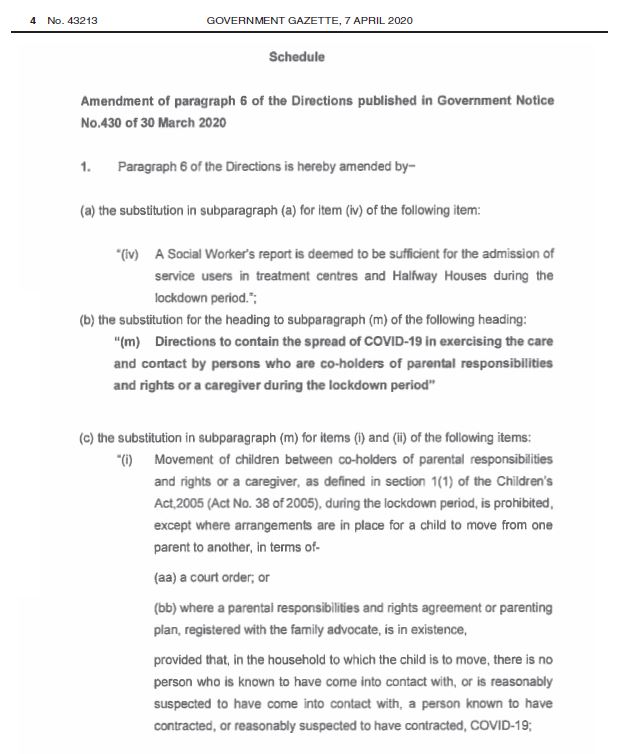
If you have a court order, or a parental responsibilities and rights agreement or parenting plan registered with the office of the Family Advocate, you can move children during the lockdown period, if certain conditions are met.
Today, the Minister of Social Development, Ms Lindiwe Zulu, MP, made changes to the regulations regarding the movement of children during the lockdown period. It is now possible for certain children to be moved between parents during the lockdown period.
The regulations apply to the following parents only:
There are arrangements in place for the children to move for one parent to another in terms of a court order; or
A parental responsibilities and rights agreement or parenting plan registered with the office of the Family Advocate; and
In the household to which the child is to move, there is no person who is known to have come into contact with, or is reasonably suspected to have come into contact with, a person known to have contracted, or reasonably suspected to have contracted, COVID-19;
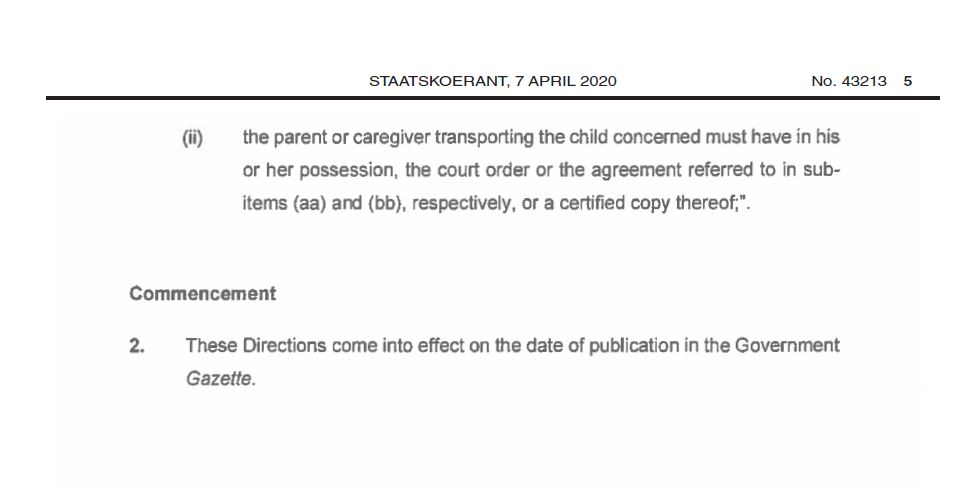
The parent or caregiver transporting the child concerned must have in his or her possession, the court order or the latter agreement, or a certified copy thereof.
Relocation – If you were born and raised in South Africa, it does not mean that you have to live there for the rest of your life. There are opportunities elsewhere in the world to live and continue your life’s journey. This may include a neighbouring country, or on another continent like Europe. Wherever it is, there are a few things to consider should you wish to relocate with your minor child. This is especially so if you are not relocating with the father. If you are the only parent to your child, then this article may not apply to you. This is where we will start off this article.
The other parent when it comes to relocation
If you are a mother and was never married to the father of your child, the father may have guardianship rights. This would be the case even though the father’s name is not mentioned on the child’s birth certificate. This is so as the Children’s Act affords certain rights to unmarried fathers. Therefore, if an unmarried father has parental rights and responsibilities of guardianship, his consent is required. This we deal with next.
Guardian’s Consent for relocation and passport – What does the law say?
The Children’s Act states the following: 18 Parental responsibilities and rights(1) A person may have either full or specific parental responsibilities and rights in respect of a child.(2) The parental responsibilities and rights that a person may have in respect of a child, include the responsibility and the right-(a) to care for the child;(b) to maintain contact with the child;(c) to act as guardian of the child; and (d) to contribute to the maintenance of the child.(3) Subject to subsections (4) and (5), a parent or other person who acts as guardian of a child must-(a) administer and safeguard the child’s property and property interests; (b) assist or represent the child in administrative, contractual and other legal matters; or(c) give or refuse any consent required by law in respect of the child, including-(i) consent to the child’s marriage;(ii) consent to the child’s adoption;(iii) consent to the child’s departure or removal from the Republic;(iv) consent to the child’s application for a passport; and(v) consent to the alienation or encumbrance of any immovable property of the child.(4) Whenever more than one person has guardianship of a child, each one of them is competent, subject to subsection (5), any other law or any order of a competent court to the contrary, to exercise independently and without the consent of the other any right or responsibility arising from such guardianship. (5) Unless a competent court orders otherwise, the consent of all the persons that have guardianship of a child is necessary in respect of matters set out in subsection (3) (c) .
Consent to the child’s departure or removal from the Republic of South Africa and Passport
As can be seen above, section 18(3)(c)(iii) and (iv), read with section 18(5) of the Children’s Act; both guardians’ consent is required for the minor child’s departure or removal from South Africa and for a passport. Therefore, should a mother decide to relocate to Canada, for example, she would need the father’s consent if he is a guardian. Now it is clear that not all fathers are guardians of their children. Here the law differentiates between married and unmarried fathers.
Parental responsibilities and rights of married fathers
Section 20 of the Children’s Act deals with the Parental responsibilities and rights of married fathers. It states the following: 20 Parental responsibilities and rights of married fathers The biological father of a child has full parental responsibilities and rights in respect of the child- (a) if he is married to the child’s mother; or (b) if he was married to the child’s mother at- (i) the time of the child’s conception; (ii) the time of the child’s birth; or (iii) any time between the child’s conception and birth. From the above, it is a given, that fathers who were married to the mother, as described above should consent for the relocation and application for a passport of the minor child. This is so as full parental responsibilities and rights include the right of guardianship over the child.
Parental responsibilities and rights of unmarried fathers
Section 21 of the Children’s Act deals with Parental responsibilities and rights of unmarried fathers. It states the following:21 Parental responsibilities and rights of unmarried fathers (1) The biological father of a child who does not have parental responsibilities and rights in respect of the child in terms of section 20, acquires full parental responsibilities and rights in respect of the child- (a) if at the time of the child’s birth he is living with the mother in a permanent life-partnership; or (b) if he, regardless of whether he has lived or is living with the mother- (i) consents to be identified or successfully applies in terms of section 26 to be identified as the child’s father or pays damages in terms of customary law; (ii) contributes or has attempted in good faith to contribute to the child’s upbringing for a reasonable period; and (iii) contributes or has attempted in good faith to contribute towards expenses in connection with the maintenance of the child for a reasonable period. (2) This section does not affect the duty of a father to contribute towards the maintenance of the child. (3) (a) If there is a dispute between the biological father referred to in subsection (1) and the biological mother of a child with regard to the fulfilment by that father of the conditions set out in subsection (1) (a) or (b) , the matter must be referred for mediation to a family advocate, social worker, social service professional or other suitably qualified person. (b) Any party to the mediation may have the outcome of the mediation reviewed by a court. (4) This section applies regardless of whether the child was born before or after the commencement of this Act. Analysing the above, it is clear that only if an unmarried father played a material role in the child’s life, as stipulated, he acquired the parental responsibility and right of guardianship over the child. Therefore, his consent would be required for the relocation and application for a passport.
What if a father does not want to consent to the relocation and application for a passport?
If the father does not want to consent to the relocation and application for a passport of the minor child and he has legal guardianship over that child; section 18(5) of the Children’s Act referred to above finds application. The mother would then have to approach the High Court to dispense with the father’s consent. We are certain that you found the above article useful and interesting. Please consider sharing it on the share buttons below. They include Facebook, Twitter, LinkedIn, WhatsApp, Gmail and more. Someone may find it useful as well. Should you require business advice or services, feel free to click on these links: Business SA | Private Legal | Envirolaws