Our Lawyer – Family Legal Services – Cape Town 0 South Africa Not all legal matters have to be complicated and daunting. Contact us today to assist you with your legal matters. We provide legal advice at your convenience.
Uncategorized
Fast and Simple Divorce: Best Way How to Achieve a Quick and Professional Separation
Navigating the divorce process can often be complex, as a divorce order involves more than simply ending the marital relationship. In cases where the couple is married in Community of Property, the divorce order also necessitates the equitable division of joint assets, which can range from pension funds, bank accounts to real estate and personal possessions. This aspect alone can become quite intricate, requiring careful consideration of each party’s contributions and entitlements.Issues involved in a divorce
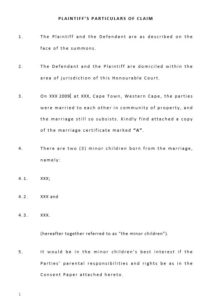
Moreover, if minor children are part of the equation, the divorce order must comprehensively address several important issues. These issues include guardianship, and decision-making authority, as well as custody arrangements that outline where the children will reside. Additionally, visitation rights need to be established to define how and when the non-custodial parent can spend time with the children. Finally, child maintenance must be determined to ensure that both parents contribute fairly to the children’s upbringing, covering expenses such as schooling, healthcare, and daily living costs. In some cases, spousal maintenance or alimony may also be applicable, depending on the financial circumstances of both parties.Getting divorced is not straightforward
Given these various considerations, getting divorced is not a straightforward task and requires diligent planning and foresight. Rushing into a divorce without thorough examination of the implications can lead to regrettable outcomes, such as forfeiting valuable assets or failing to secure adequate financial support for oneself or one’s children. It is particularly concerning if a party agrees to unfavorable terms regarding contact rights with their children or maintenance for their shared expenses, all in the pursuit of a quick resolution.Best Way to Get Divorced Quickly
If you and your spouse are seeking to finalize your divorce as quickly as possible, one of the most effective strategies is to approach a divorce attorney or advocate together. It is essential that both parties participate in the initial meeting with the lawyer to ensure transparency and open communication. Meeting separately or having one spouse relayed information later can lead to misunderstandings and may hinder the process.Schedule a Joint Consultation
During this joint consultation, both parties have the opportunity to ask questions and present all relevant information regarding the financial aspects of the marriage, including assets, debts, and income, as well as details concerning any minor children. This collaborative approach allows the attorney or advocate to ask pointed questions, gather necessary information from both spouses simultaneously, and clarify any potential issues right away.Drafting the neccessary Court documents
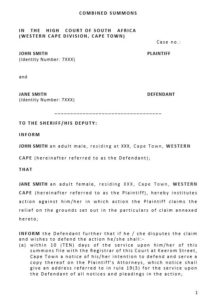
Once the attorney or advocate has collected all pertinent information and clearly explained the divorce process and its implications, they can swiftly proceed to draft the necessary court documents. This includes preparing the divorce summons and any other required forms to initiate the legal proceedings. The attorney or advocate will then file these documents with the court and arrange for them to be served to the other spouse. Following this, they will apply for a court date to finalize the divorce.It is best to be proactive
By taking this proactive and collaborative approach, couples can significantly streamline the divorce process, reducing stress and ensuring that all legal requirements are met efficiently and professionally. If you wish to consult with us on your divorce, please complete the form below.
Fast and Simple Divorce: Best Way How to Achieve a Quick and Professional Separation Navigating the divorce process can often be complex, as a divorce order involves more than simply ending the marital relationship. In cases where the couple is married in Community of Property, the divorce order also necessitates Continue Reading
Our Lawyer Legal Services and Advice – Contact us today for your legal issues
We at Our Lawyer (Pty) Ltd believe in provide our clients with the best solutions for their legal problems. This we base on various factors. One of them is the importance of the case to you. [caption id="attachment_8310" align="alignleft" width="640"]
Cyber Law – Legal Services and Advice Cape Town South Africa[/caption] [caption id="attachment_8309" align="alignleft" width="640"]
Court Litigation – Legal Services and Advice Cape Town South Africa[/caption] [caption id="attachment_8308" align="alignleft" width="640"]
Court Building – Legal Services and Advice Cape Town South Africa[/caption] [caption id="attachment_8307" align="alignleft" width="640"]
Advocate Abduroaf – Legal Services and Advice Cape Town South Africa[/caption] [caption id="attachment_8306" align="alignleft" width="640"]
Contract Abduroaf – Legal Services and Advice Cape Town South Africa[/caption] [caption id="attachment_8305" align="alignleft" width="640"]
Business Lawyer – Legal Services and Advice Cape Town South Africa[/caption] [caption id="attachment_8304" align="alignleft" width="640"]
Divorce Certificate – Legal Services and Advice Cape Town South Africa[/caption] [caption id="attachment_8303" align="alignleft" width="640"]
Age of Majority – Legal Services and Advice Cape Town South Africa[/caption] [caption id="attachment_8302" align="alignleft" width="640"]
Justice Abduroaf – Legal Services and Advice Cape Town South Africa[/caption]
Our Lawyer Legal Services and Advice – Contact us today for your legal issues We at Our Lawyer (Pty) Ltd believe in provide our clients with the best solutions for their legal problems. This we base on various factors. One of them is the importance of the case to you.
Grandparents may be ordered to pay child support if the father refuses or cannot afford to do so.

“DID YOU KNOW: Advocate Muhammad Abduroaf was the advocate who won a ground-breaking case for his client? Because of this case, it is now possible to claim maintenance from paternal grandparents of children born out of wedlock?. This was not possible for over 80 years. The relevant case is Petersen v Maintenance Officer Simon’s Town Maintenance Court and Others 2004 2 SA 56 (C) 381 .”
Grandparents, parents and children – A child cannot choose his or her parents and grandparent. Moreover, every child would want to have parents who would try their best to maintain and support them until they are self-supporting. However, the reality is that that is not always the case. It often happens that parents renege on their duty to actively support their children.Grandparent supporting their grandchild
Furthermore, grandparents would also want their children to support their children, as they did. The reality is, that often times, grandparents have to step in. They have to support their grandchild due to their child not being able to, or unwilling to do so. Of course, there are legitimate cases where the parents cannot afford to care for their children. In such a case, the grandparents may be more than happy to assist. This post does not deal with the latter scenario.What does the law say on grandparents’ duty of support?
In short, if a parent cannot adequately maintain a child, the law can force grandparents to assist. This includes both paternal and maternal grandparents. A parent may also claim support from their child. However, this article does not deal with that scenario.What to do if the father of the child cannot afford to pay child support?
You cannot claim child support from grandparents at the Maintenance Court as the first step. This is so even if they are extremely wealthy. An enquiry first needs to be instituted against the father of the child concerned. You are welcome to ask the grandparents though for support. Therefore, you need to make an application to the Maintenance Court for child support from the father first. If it is determined, that that father cannot afford to pay child support, then they climb a level up. In this case, to the grandparents. The Maintenance Court would then decide whether or not to institute an enquiry against the grandparents. If it is decided that there is a need and the grandparent can afford it, then a maintenance order would be made against the grandparents.
We are certain that you found the above article useful and interesting. Please consider sharing it on the share buttons below. They include Facebook, Twitter, LinkedIn, WhatsApp, Gmail and more. Someone may find it useful as well. Should you require business advice or services, feel free to click on these links: Business SA | Private Legal | Envirolaws
Grandparents may be ordered to pay child support if the father refuses or cannot afford to do so. “DID YOU KNOW: Advocate Muhammad Abduroaf was the advocate who won a ground-breaking case for his client? Because of this case, it is now possible to claim maintenance from paternal grandparents of Continue Reading
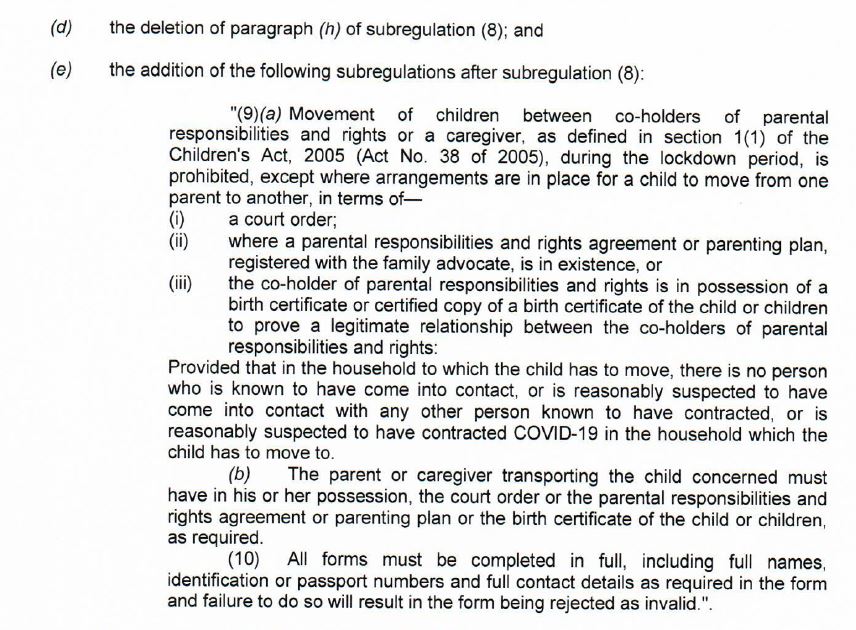
Latest regulations regarding the movement of children between co-holders of parental responsibilities and rights or a caregiver. Essentially, all children can move, with specific requirements to be in place – 16 April 2020
On 16 April 2020, the Minister of Cooperative Governance and Traditional Affairs Dr Nkosazana Dlamini Zuma made changes to the regulations regarding the movement of children during the lockdown.The material change is that you do not have to have a court order or a parental responsibilities and rights agreement or parenting plan, registered with the family advocate. Possession of a birth certificate or certified copy of a birth certificate is now also allowed.
In summary, the new regulations published today applies as follows:- The movement of children should be between co-holders of parental responsibilities and rights or a caregiver;
- The following must be in existence:
- A court order;
- a parental responsibilities and rights agreement or parenting plan, registered with the family advocate, or
- the co-holder of parental responsibilities and rights is in possession of a birth certificate or certified copy of a birth certificate of the child or children. This is required to prove a legitimate relationship between the co-holders of parental responsibilities and rights;
- In the household to which the child is to move, there is no person who is known to have come into contact with, or is reasonably suspected to have come into contact with, a person known to have contracted, or reasonably suspected to have contracted, COVID-19;
- The parent or caregiver transporting the child concerned must have in his or her possession, the court order or the parental responsibilities and rights agreement or a parenting plan or the birth certificate of the child or children, as required.
- All forms must be completed in full, including full names, identification or passport numbers and full contact details as required in the form and failure to do so will result in the form being rejected as invalid.
The relevant regulations are copied below:
[caption id="attachment_9046" align="alignleft" width="856"]
regulations-movement-children-16-April-lockdown[/caption]
- A court order;
- a parental responsibilities and rights agreement or parenting plan, registered with the family advocate, or
Latest regulations regarding the movement of children between co-holders of parental responsibilities and rights or a caregiver. Essentially, all children can move, with specific requirements to be in place – 16 April 2020 On 16 April 2020, the Minister of Cooperative Governance and Traditional Affairs Dr Nkosazana Dlamini Zuma made Continue Reading
Relocation of Minor Children and Passport Consent Issues – Videos by Advocate Muhammad Abduroaf
If you are a co-holder of parental responsibilities and rights, you should consent to a minor child obtaining a passport and for the minor child to leave the Republic of South Africa. Watch the videos below by Advocate Muhammad Abduroaf dealing with the issues. https://youtu.be/N-FTRIl3rwE https://youtu.be/bz3jzTM5hMY https://youtu.be/vfnuM0ktcgs https://youtu.be/JtW6_kV-8bc https://youtu.be/yWRXqe-JqJc https://youtu.be/IP4nLI56Sgg
Relocation of Minor Children and Passport Consent Issues – Videos by Advocate Muhammad Abduroaf If you are a co-holder of parental responsibilities and rights, you should consent to a minor child obtaining a passport and for the minor child to leave the Republic of South Africa. Watch the videos below Continue Reading
[caption id="attachment_10824" align="alignnone" width="664"]
Relocation consent Court Order for minor child to China – Advocate Muhammad Abduroaf[/caption]I want to relocate from South Africa to China with my minor child. The other parent does not want my child to relocate to China. What can I do?
China is a popular destination to emigrate to. People emigrate from South Africa for many reasons. It ranges from better employment opportunities, family relations, or for a better standard of living. Whatever the reason a parent wants to relocate to China, if a minor child will be joining that parent and also relocating to China, then the parent remaining in South Africa’s consent would usually be required. Let us unpack the legal issues a parent may encounter when wanting to emigrate to China. Before we do so, let us list the various cities and towns in China to which you may want to relocate: Anhui (province), Anqing, Bengbu, Hefei, Huainan, Huangshan, Ma’anshan, Shexian, Tongcheng, Tongling, Wuhu, Xuancheng, Beijing (provincial-level municipality, capital), Beijing, Chongqing (provincial-level municipality), Chongqing, Hechuan, Wanzhou, Fujian (province), Fuzhou, Longyan, Nanping, Quanzhou, Sanming, Shaowu, Xiamen, Yong’an, Zhangzhou, Gansu (province), Dunhuang, Jiuquan, Lanzhou, Pingliang, Tianshui, Wuwei, Yumen, Guangdong (province), Chaozhou, Foshan, Guangzhou, Jiangmen, Maoming, Meizhou, Shantou, Shaoguan, Shenzhen, Zhanjiang, Zhaoqing, Zhongshan, Guangxi (autonomous region), Baise, Beihai, Guilin, Liuzhou, Nanning, Pingxiang, Wuzhou, Yulin, Guizhou (province), Anshun, Duyun, Guiyang, Zunyi, Hainan (province), Haikou, Hebei (province), Baoding, Cangzhou, Chengde, Handan, Kalgan, Qinhuangdao, Shanhaiguan, Shijiazhuang, Tangshan, Xingtai, Xuanhua, Zhengding, Heilongjiang (province), Acheng, Binxian, Harbin, Hegang, Hulan, Jiamusi, Jixi, Mudanjiang, Qiqihar, Shuangyashan, Yichun, Henan (province), Anyang, Hebi, Jiaozuo, Kaifeng, Luohe, Luoyang, Nanyang, Shangqiu, Xinxiang, Xinyang, Xuchang, Zhengzhou, Zhoukou, Hong Kong (special administrative region), Hong Kong, Victoria, Hubei (province), Daye, Hankou, Hanyang, Huangshi, Jingzhou, Laohekou, Wuchang, Wuhan, Xiangfan, Yichang, Hunan (province), Changde, Changsha, Hengyang, Jinshi, Shaoyang, Xiangtan, Yiyang, Yueyang, Zhuzhou, Inner Mongolia (autonomous region), Baotou, Chifeng, Duolun, Erenhot, Hailar, Hohhot, Jining, Manzhouli, Tongliao, Jiangsu (province), Changshu, Changzhou, Huai’an, Huaiyin, Lianyungang, Nanjing, Nantong, Suzhou, Taizhou, Wuxi, Xuzhou, Yancheng, Yangzhou, Zhenjiang, Jiangxi (province), Ganzhou, Ji’an, Jingdezhen, Jiujiang, Nanchang, Pingxiang, Shangrao, Zhangshu, Jilin (province), Baicheng, Changchun, Jilin, Liaoyuan, Siping, Tonghua, Yanji, Liaoning (province), Anshan, Beipiao, Benxi, Dalian, Dandong, Fushun, Fuxin, Jinzhou (southern Liaoning), Jinzhou (western Liaoning), Liaoyang, Lüshun, Shenyang, Wafangdian, Yingkou, Macau (special administrative region), Macau, Ningxia (autonomous region), Yinchuan, Qinghai (province), Golmud, Lenghu, Xining, Shaanxi (province), Ankang, Baoji, Hanzhong, Shangluo, Tongguan, Xi’an, Xianyang, Yan’an, Shandong (province), Dezhou, Jinan, Jining, Linzi, Qingdao, Qufu, Weifang, Weihai, Yantai, Zaozhuang, Zibo, Shanghai (provincial-level municipality), Shanghai, Shanxi (province), Changzhi, Datong, Jinzhong, Linfen, Puzhou, Taiyuan, Yangquan, Sichuan (province), Chengdu, Kangding, Luzhou, Mianyang, Nanchong, Neijiang, Wutongqiao, Ya’an, Yibin, Zigong, Tianjin (provincial-level municipality), Tanggu, Tianjin, Tibet (autonomous region), Gartok, Gyangzê, Lhasa, Xigazê, Xinjiang (autonomous region), Hami, Hotan, Karamay, Kashgar, Kucha, Kuldja, Shihezi, Turfan, Ürümqi, Yarkand, Yunnan (province), Dali, Gejiu, Jinghong, Kaiyuan, Kunming, Pu’er, Zhejiang (province), Fenghua, Hangzhou, Huzhou, Jiaxing, Jinhua, Ningbo, Quzhou, Shaoxing, Wenzhou. (https://www.britannica.com/topic/List-of-cities-in-China-2040392)Why do I require the other parent’s Consent to relocate to China?
According to South African law, if you are a co-holder of parental responsibilities and rights over your minor child, you must consent to your child leaving South Africa. In this case, relocating to China. Here we refer to section 18 of the Children’s Act 38 of 2005. The entire provision is as follows: 18 Parental responsibilities and rights (1) A person may have either full or specific parental responsibilities and rights in respect of a child. (2) The parental responsibilities and rights that a person may have in respect of a child, include the responsibility and the right- (a) to care for the child; (b) to maintain contact with the child; (c) to act as guardian of the child; and (d) to contribute to the maintenance of the child. (3) Subject to subsections (4) and (5), a parent or other person who acts as guardian of a child must- (a) administer and safeguard the child’s property and property interests; (b) assist or represent the child in administrative, contractual and other legal matters; or (c) give or refuse any consent required by law in respect of the child, including- (i) consent to the child’s marriage; (ii) consent to the child’s adoption; (iii) consent to the child’s departure or removal from the Republic; (iv) consent to the child’s application for a passport; and (v) consent to the alienation or encumbrance of any immovable property of the child. (4) Whenever more than one person has guardianship of a child, each one of them is competent, subject to subsection (5), any other law or any order of a competent court to the contrary, to exercise independently and without the Consent of the other any right or responsibility arising from such guardianship. (5) Unless a competent court orders otherwise, the Consent of all the persons that have guardianship of a child is necessary in respect of matters set out in subsection (3)(c). Now let us explain what Parental Responsibilities and Rights are.What are Parental Responsibilities and Rights of a parent in relation to a child?
As can be seen from section 18(2) of the Children’s Act, when we refer to Parental Responsibilities and Rights, we refer to the following: (a) to care for the child; (b) to maintain contact with the child; (c) to act as guardian of the child; and (d) to contribute to the maintenance of the child. Therefore, if a parent has parental responsibilities and rights over a minor child, and accordingly, rights of guardianship, their Consent is required when it comes to issues of guardianship. As seen from section 18(3)(c) of the Children’s Act above, both parents’ Consent is required should a minor child depart from the Republic of South Africa. In this case, to emigrate to China. Even if the minor child only wants to go for a short holiday to China, both guardians’ Consent would be required.When would the other parent be seen as a guardian in the case of a relocation matter to China?
It must be noted that not all parents are legal guardians over their minor children. We should therefore distinguish between married or divorced parents and parents who were never married. As you would see below, usually married, or divorced parents’ Consent would be required for a minor child to relocate or emigrate to China. However, that does not automatically apply to parents who were never married. This could be because the child could have been born from a brief encounter and never met his or her father. It would not make sense that a parent who never met his or her 15-year-old child, should give Consent for relocation to China.Mother’s Consent for relocation of the minor child to China
Section 19 of the Children’s Act deals with the Parental responsibilities and rights of mothers. It states the following: 19 Parental responsibilities and rights of mothers (1) The biological mother of a child, whether married or unmarried, has full parental responsibilities and rights in respect of the child. (2) If- (a) the biological mother of a child is an unmarried child who does not have guardianship in respect of the child; and (b) the biological father of the child does not have guardianship in respect of the child, the guardian of the child’s biological mother is also the guardian of the child. (3) This section does not apply in respect of a child who is the subject of a surrogacy agreement. As seen from section 19(1) of the Children’s Act, in most cases involving the relocation of a minor child to China, the mother’s Consent is required as she has full parental responsibilities and rights over the minor child.Married father’s Consent for the relocation of the minor child to China
Section 20 of the Children’s Act deals with Parental responsibilities and rights of married fathers. It states the following: 20 Parental responsibilities and rights of married fathers The biological father of a child has full parental responsibilities and rights in respect of the child- (a) if he is married to the child’s mother; or (b) if he was married to the child’s mother at (i) the time of the child’s conception; (ii) the time of the child’s birth; or (iii) any time between the child’s conception and birth. As can be seen from sections 20 (a) and (b) of the Children’s Act, if the father and the mother were married, or are married, then his Consent is required for the minor child to relocate to China. Of course, an exception to this would be should a court of law order otherwise. This would be the case should the parents be divorced and the divorce court ordered that only the mother may act as guardian. Next, we deal with the issue of an unmarried father’s Consent to relocate a minor child to China.Consent of unmarried fathers for the relocation of their minor children to China.
Section 21 of the Children’s Act deals with parental responsibilities and rights of unmarried fathers. The section states the following: 21 Parental responsibilities and rights of unmarried fathers (1) The biological father of a child who does not have parental responsibilities and rights in respect of the child in terms of section 20, acquires full parental responsibilities and rights in respect of the child- (a) if at the time of the child’s birth he is living with the mother in a permanent life-partnership; or (b) if he, regardless of whether he has lived or is living with the mother- (i) consents to be identified or successfully applies in terms of section 26 to be identified as the child’s father or pays damages in terms of customary law; (ii) contributes or has attempted in good faith to contribute to the child’s upbringing for a reasonable period; and (iii) contributes or has attempted in good faith to contribute towards expenses in connection with the maintenance of the child for a reasonable period. (2) This section does not affect the duty of a father to contribute towards the maintenance of the child. (3) (a) If there is a dispute between the biological father referred to in subsection (1) and the biological mother of a child with regard to the fulfilment by that father of the conditions set out in subsection (1) (a) or (b), the matter must be referred for mediation to a family advocate, social worker, social service professional or other suitably qualified person. (b) Any party to the mediation may have the outcome of the mediation reviewed by a court. (4) This section applies regardless of whether the child was born before or after the commencement of this Act. As can be seen from the latter sections, a father of a child born out of wedlock does not automatically have parental responsibilities and rights over his minor child. He may however acquire those parental responsibilities and rights over his minor child if he is materially involved in the child’s life. That would be where the father and the mother were in a permanent life partnership when the child was born or he is meaningfully involved in the child’s life, as outlined above. We shall not go into much detail regarding that. However, in most cases, if the father had regular contact with the child and paid child support, he would have acquired parental responsibilities and rights over the minor child.What do you do if the other parent does not want to consent to the minor child relocating to China?
Suppose the other parent also has parental responsibilities and rights over the minor child, and he or she does not want to consent to the relocation of the minor child to China, then in such a case, the Court needs to be approached. Here I refer you back to section 18(5) of the Children’s Act referred to above where it states: (5) Unless a competent court orders otherwise, the Consent of all the persons that have guardianship of a child is necessary in respect of matters set out in subsection (3)(c). Therefore, after your Court Application has been launched an both sides have been heard, the Court would make the necessary Order. If you are successful in your application for the relocation of your minor children to China, then the Court will make an Order similar to that which is shown below. [caption id="attachment_10823" align="alignnone" width="682"]
Relocation consent Court Order for minor child to China – Advocate Muhammad Abduroaf[/caption] [caption id="attachment_10824" align="alignnone" width="692"]
Relocation consent Court Order for minor child to China – Advocate Muhammad Abduroaf[/caption]
I want to relocate from South Africa to China with my minor child. The other parent does not want my child to relocate to China. What can I do? China is a popular destination to emigrate to. People emigrate from South Africa for many reasons. It ranges from better employment Continue Reading
Top tips from a Senior Family Law Advocate on how to deal with your Child Custody matter in the Oudtshoorn Children’s Court
Family law legal matters can be very stressful. This is so whether you live in Oudtshoorn or any other city in South Africa. Especially so if you have no idea how the legal processes work. It is one thing to know that you are entitled to child support, but it is a totally different matter to know the law and procedure on how to claim child support. Luckily in child maintenance matters, the maintenance court is there to assist you in completing the application form. However, many times that is not enough. Especially so if the other parent has a lawyer and knows how to present the case for his or her client. This article, however, deals with some top tips in care and contact or custody matters in the Children’s Court in Oudtshoorn. It would explain the processes involved and advise on how to be best prepared for your matter. This advice is applicable whether you live in Oudtshoorn or any other city in South Africa.What to do before visiting the Oudtshoorn Children’s Court
Before you approach the Children’s Court in Oudtshoorn, first try to resolve the issues with the other parent. Therefore, if you want more contact with your child and the other parent is refusing, try to resolve the matter first with that parent. If that does not work, try mediation. The mediator can be anyone, from a trusted mutual friend, priest, or other religious leaders, or a professional like an attorney, psychologist, or the office of the Family Advocate. Oudtshoorn has many professionals that can assist you in this regard. If resolving the matter by yourselves is not possible, or mediation fails, then we suggest you approach the Oudtshoorn Children’s Court for assistance. TIP: Focus on getting someone neutral to assist in mediating your matter. Organisations like FAMSA and FAMAC can be of assistance. Google them.Approaching the Oudtshoorn Children’s Court
The Oudtshoorn Children’s Court should be approached if it is the closest Children’s Court to you. You need to verify with the Oudtshoorn Children’s Court that you fall under their area of jurisdiction. If not, they would direct you to which Children’s Court is applicable to you. Once you arrive at the Oudtshoorn Children’s Court, they will provide you with a form headed “Bringing Matter to Court in Terms of Section 53 Children’s Act, 2005 (Act no. 38 of 2005) Regulation Relating to Children’s Court and International Child Abduction, 2008 [Regulation 6]. This form is also called Form 2. In this form, you will provide all your particulars and that of the child or children and the other parent. The sections in the form are as follows:- PART A: PARTICULARS OF CHILD(REN)
- PART B: PARTICULARS OF *CHILD WHO IS AFFECTED BY OR INVOLVED IN THE MATTER/PERSON *ACTING IN THE INTEREST OF THE CHILD/*ON BEHALF OF THE CHILD WHO CANNOT ACT IN HIS/HER OWN NAME/ *MEMBER OF A GROUP OF CLASS OF CHILDREN/*IN THE PUBLIC INTEREST (SECTION 53(2)
- PART C: PARTICULARS OF PERSONS HAVING AN INTEREST IN THE MATTER
- PART D: PARTICULARS OF MATTER
In part D, the following is stated which you need to provide in the form:- Nature of matter brought to Court: (Please give full details of the matter e.g., registration/amendment of parenting plans, removal of child to safe care, children in need of care and protection, placement in youth care centers, adoption etc.
- Documents: Are there any documents relating to the matter? (If so please attach)
Once you have completed the form and attached the relevant documents to it, you must take it to a commissioner of Oaths to have it commissioned. It does not have to be in Oudtshoorn. TIP: Draft a separate affidavit explaining your case. Outline some background information and reasons why the Court should give you what you request. Attach it to Form 2.Processing your Application at the Oudtshoorn Children’s Court
Once you complete the Form A and submit it to the Clerk of the Oudtshoorn Children’s Court, they will process it and allocate it a case number or reference number. The Clerk of the Court would then allocate a date to the matter and advise the parties accordingly when the court date is. Please note that some courts follow a different process for processing the application and informing the parties of the court date. Please enquire from the Court when making the application what process they follow. TIP: Obtain the contact details of the Court for you to contact them to obtain the Court date or other information. Ask for their contact number and email address.Appearing in the Oudtshoorn Children’s Court
When notified of the Court date, both you and the other parent should attend. If you are making use of a lawyer (Advocate or Attorney), inform them timeously of the date. Depending on the Court, you may first see the Clerk or go directly to the Magistrate. The Children’s Court would do its best to try to resolve the matter. If the parents cannot come to an agreement, the Children’s Court may postpone the matter for either of the following:- Get a social worker involved in the matter;
- Appoint a legal representative for the minor child;
- Implement interim care and contact arrangements;
- Having the parties attempt to agree on a parenting plan;
In serious matters, the Court may remove the minor child from both parents and place the child in foster care. The powers of the Children’s Court are extensive. It will, however, focus on what is in the child’s best interests. TIP: Be as vocal as possible. Do not expect the Court to be understanding of your case or be on your side. It is your duty to explain your case and provide the Court with all the relevant information they require for them to make a fair decision.Finalising the matter in the Oudtshoorn Children’s Court
Once the Oudtshoorn Children’s Court has enough information to make a final decision, it will do so. Depending on the facts of the matter, that could either be making a Parenting Plan, an Order of the Court or a final care and contact Order. The Court may even make further interim orders, where the parties are to return to Court after a few months, or a year later. TIP: Do not agree to something just because the social worker, a lawyer, or the Court suggest it. You need to be happy with what is decided. The above Oudtshoorn Children’s Court Application tips should apply to the following provinces and cities:Eastern Cape:
Alice, Butterworth, East London, Graaff-Reinet, Grahamstown, King William’s Town, Mthatha Port Elizabeth, Queenstown, Uitenhage, ZwelitshaFree State:
Bethlehem. Bloemfontein, Jagersfontein, Kroonstad, Odendaalsrus, Parys, Phuthaditjhaba, Sasolburg, Virginia, WelkomGauteng:
Benoni, Boksburg, Brakpan, Carletonville, Germiston, Johannesburg, Krugersdorp, Pretoria, Randburg, Randfontein, Roodepoort, Soweto, Springs, Vanderbijlpark, VereenigingKwaZulu-Natal:
Durban, Empangeni, Ladysmith, Newcastle, Pietermaritzburg, Pinetown, Ulundi, UmlaziLimpopo:
Giyani, Lebowakgomo, Musina, Phalaborwa, Polokwane, Seshego, Sibasa, ThabazimbiMpumalanga:
Emalahleni, Nelspruit, Secunda, North West, Klerksdorp, Mahikeng, Mmabatho, Potchefstroom, Rustenburg, Northern Cape, Kimberley, Kuruman, Port NollothWestern Cape:
Bellville, Oudtshoorn, Constantia, George, Hopefield, Oudtshoorn, Paarl, Simon’s Town, Stellenbosch, Swellendam, Worcester
Top tips from a Senior Family Law Advocate on how to deal with your Child Custody matter in the Oudtshoorn Children’s Court Family law legal matters can be very stressful. This is so whether you live in Oudtshoorn or any other city in South Africa. Especially so if you Continue Reading
Top tips from a Senior Family Law Advocate on how to deal with your Child Custody matter in the Musina Children’s Court
Family law legal matters can be very stressful. This is so whether you live in Musina or any other city in South Africa. Especially so if you have no idea how the legal processes work. It is one thing to know that you are entitled to child support, but it is a totally different matter to know the law and procedure on how to claim child support. Luckily in child maintenance matters, the maintenance court is there to assist you in completing the application form. However, many times that is not enough. Especially so if the other parent has a lawyer and knows how to present the case for his or her client.
This article, however, deals with some top tips in care and contact or custody matters in the Children’s Court in Musina. It would explain the processes involved and advise on how to be best prepared for your matter. This advice is applicable whether you live in Musina or any other city in South Africa.
What to do before visiting the Musina Children’s Court
Before you approach the Children’s Court in Musina, first try to resolve the issues with the other parent. Therefore, if you want more contact with your child and the other parent is refusing, try to resolve the matter first with that parent. If that does not work, try mediation. The mediator can be anyone, from a trusted mutual friend, priest, or other religious leaders, or a professional like an attorney, psychologist, or the office of the Family Advocate. Musina has many professionals that can assist you in this regard. If resolving the matter by yourselves is not possible, or mediation fails, then we suggest you approach the Musina Children’s Court for assistance.
TIP: Focus on getting someone neutral to assist in mediating your matter. Organisations like FAMSA and FAMAC can be of assistance. Google them.
Approaching the Musina Children’s Court
The Musina Children’s Court should be approached if it is the closest Children’s Court to you. You need to verify with the Musina Children’s Court that you fall under their area of jurisdiction. If not, they would direct you to which Children’s Court is applicable to you.
Once you arrive at the Musina Children’s Court, they will provide you with a form headed “Bringing Matter to Court in Terms of Section 53 Children’s Act, 2005 (Act no. 38 of 2005) Regulation Relating to Children’s Court and International Child Abduction, 2008 [Regulation 6]. This form is also called Form 2.
In this form, you will provide all your particulars and that of the child or children and the other parent. The sections in the form are as follows:
- PART A: PARTICULARS OF CHILD(REN)
- PART B: PARTICULARS OF *CHILD WHO IS AFFECTED BY OR INVOLVED IN THE MATTER/PERSON *ACTING IN THE INTEREST OF THE CHILD/*ON BEHALF OF THE CHILD WHO CANNOT ACT IN HIS/HER OWN NAME/ *MEMBER OF A GROUP OF CLASS OF CHILDREN/*IN THE PUBLIC INTEREST (SECTION 53(2)
- PART C: PARTICULARS OF PERSONS HAVING AN INTEREST IN THE MATTER
- PART D: PARTICULARS OF MATTER
In part D, the following is stated which you need to provide in the form:
- Nature of matter brought to Court: (Please give full details of the matter e.g., registration/amendment of parenting plans, removal of child to safe care, children in need of care and protection, placement in youth care centers, adoption etc.
- Documents: Are there any documents relating to the matter? (If so please attach)
Once you have completed the form and attached the relevant documents to it, you must take it to a commissioner of Oaths to have it commissioned. It does not have to be in Musina.
TIP: Draft a separate affidavit explaining your case. Outline some background information and reasons why the Court should give you what you request. Attach it to Form 2.
Processing your Application at the Musina Children’s Court
Once you complete the Form A and submit it to the Clerk of the Musina Children’s Court, they will process it and allocate it a case number or reference number. The Clerk of the Court would then allocate a date to the matter and advise the parties accordingly when the court date is. Please note that some courts follow a different process for processing the application and informing the parties of the court date. Please enquire from the Court when making the application what process they follow.
TIP: Obtain the contact details of the Court for you to contact them to obtain the Court date or other information. Ask for their contact number and email address.
Appearing in the Musina Children’s Court
When notified of the Court date, both you and the other parent should attend. If you are making use of a lawyer (Advocate or Attorney), inform them timeously of the date. Depending on the Court, you may first see the Clerk or go directly to the Magistrate. The Children’s Court would do its best to try to resolve the matter. If the parents cannot come to an agreement, the Children’s Court may postpone the matter for either of the following:
- Get a social worker involved in the matter;
- Appoint a legal representative for the minor child;
- Implement interim care and contact arrangements;
- Having the parties attempt to agree on a parenting plan;
-
In serious matters, the Court may remove the minor child from both parents and place the child in foster care. The powers of the Children’s Court are extensive. It will, however, focus on what is in the child’s best interests.
TIP: Be as vocal as possible. Do not expect the Court to be understanding of your case or be on your side. It is your duty to explain your case and provide the Court with all the relevant information they require for them to make a fair decision.
Finalising the matter in the Musina Children’s Court
Once the Musina Children’s Court has enough information to make a final decision, it will do so. Depending on the facts of the matter, that could either be making a Parenting Plan, an Order of the Court or a final care and contact Order. The Court may even make further interim orders, where the parties are to return to Court after a few months, or a year later.
TIP: Do not agree to something just because the social worker, a lawyer, or the Court suggest it. You need to be happy with what is decided.
The above Musina Children’s Court Application tips should apply to the following provinces and cities:
Eastern Cape:
Alice, Butterworth, East London, Graaff-Reinet, Grahamstown, King William’s Town, Mthatha
Port Elizabeth, Queenstown, Uitenhage, Zwelitsha
Free State:
Bethlehem. Bloemfontein, Jagersfontein, Kroonstad, Odendaalsrus, Parys, Phuthaditjhaba, Sasolburg, Virginia, Welkom
Gauteng:
Benoni, Boksburg, Brakpan, Carletonville, Germiston, Johannesburg, Krugersdorp, Pretoria, Randburg, Randfontein, Roodepoort, Soweto, Springs, Vanderbijlpark, Vereeniging
KwaZulu-Natal:
Durban, Empangeni, Ladysmith, Newcastle, Pietermaritzburg, Pinetown, Ulundi, Umlazi
Limpopo:
Giyani, Lebowakgomo, Musina, Phalaborwa, Polokwane, Seshego, Sibasa, Thabazimbi
Mpumalanga:
Emalahleni, Nelspruit, Secunda, North West, Klerksdorp, Mahikeng, Mmabatho, Potchefstroom, Rustenburg, Northern Cape, Kimberley, Kuruman, Port Nolloth
Western Cape:
Bellville, Musina, Constantia, George, Hopefield, Oudtshoorn, Paarl, Simon’s Town, Stellenbosch, Swellendam, Worcester
Top tips from a Senior Family Law Advocate on how to deal with your Child Custody matter in the Musina Children’s Court Family law legal matters can be very stressful. This is so whether you live in Musina or any other city in South Africa. Especially so if you Continue Reading
Top tips from a Senior Family Law Advocate on how to deal with your Child Custody matter in the Pietermaritzburg Children’s Court
Family law legal matters can be very stressful. This is so whether you live in Pietermaritzburg or any other city in South Africa. Especially so if you have no idea how the legal processes work. It is one thing to know that you are entitled to child support, but it is a totally different matter to know the law and procedure on how to claim child support. Luckily in child maintenance matters, the maintenance court is there to assist you in completing the application form. However, many times that is not enough. Especially so if the other parent has a lawyer and knows how to present the case for his or her client.
This article, however, deals with some top tips in care and contact or custody matters in the Children’s Court in Pietermaritzburg. It would explain the processes involved and advise on how to be best prepared for your matter. This advice is applicable whether you live in Pietermaritzburg or any other city in South Africa.
What to do before visiting the Pietermaritzburg Children’s Court
Before you approach the Children’s Court in Pietermaritzburg, first try to resolve the issues with the other parent. Therefore, if you want more contact with your child and the other parent is refusing, try to resolve the matter first with that parent. If that does not work, try mediation. The mediator can be anyone, from a trusted mutual friend, priest, or other religious leaders, or a professional like an attorney, psychologist, or the office of the Family Advocate. Pietermaritzburg has many professionals that can assist you in this regard. If resolving the matter by yourselves is not possible, or mediation fails, then we suggest you approach the Pietermaritzburg Children’s Court for assistance.
TIP: Focus on getting someone neutral to assist in mediating your matter. Organisations like FAMSA and FAMAC can be of assistance. Google them.
Approaching the Pietermaritzburg Children’s Court
The Pietermaritzburg Children’s Court should be approached if it is the closest Children’s Court to you. You need to verify with the Pietermaritzburg Children’s Court that you fall under their area of jurisdiction. If not, they would direct you to which Children’s Court is applicable to you.
Once you arrive at the Pietermaritzburg Children’s Court, they will provide you with a form headed “Bringing Matter to Court in Terms of Section 53 Children’s Act, 2005 (Act no. 38 of 2005) Regulation Relating to Children’s Court and International Child Abduction, 2008 [Regulation 6]. This form is also called Form 2.
In this form, you will provide all your particulars and that of the child or children and the other parent. The sections in the form are as follows:
- PART A: PARTICULARS OF CHILD(REN)
- PART B: PARTICULARS OF *CHILD WHO IS AFFECTED BY OR INVOLVED IN THE MATTER/PERSON *ACTING IN THE INTEREST OF THE CHILD/*ON BEHALF OF THE CHILD WHO CANNOT ACT IN HIS/HER OWN NAME/ *MEMBER OF A GROUP OF CLASS OF CHILDREN/*IN THE PUBLIC INTEREST (SECTION 53(2)
- PART C: PARTICULARS OF PERSONS HAVING AN INTEREST IN THE MATTER
- PART D: PARTICULARS OF MATTER
In part D, the following is stated which you need to provide in the form:
- Nature of matter brought to Court: (Please give full details of the matter e.g., registration/amendment of parenting plans, removal of child to safe care, children in need of care and protection, placement in youth care centers, adoption etc.
- Documents: Are there any documents relating to the matter? (If so please attach)
Once you have completed the form and attached the relevant documents to it, you must take it to a commissioner of Oaths to have it commissioned. It does not have to be in Pietermaritzburg.
TIP: Draft a separate affidavit explaining your case. Outline some background information and reasons why the Court should give you what you request. Attach it to Form 2.
Processing your Application at the Pietermaritzburg Children’s Court
Once you complete the Form A and submit it to the Clerk of the Pietermaritzburg Children’s Court, they will process it and allocate it a case number or reference number. The Clerk of the Court would then allocate a date to the matter and advise the parties accordingly when the court date is. Please note that some courts follow a different process for processing the application and informing the parties of the court date. Please enquire from the Court when making the application what process they follow.
TIP: Obtain the contact details of the Court for you to contact them to obtain the Court date or other information. Ask for their contact number and email address.
Appearing in the Pietermaritzburg Children’s Court
When notified of the Court date, both you and the other parent should attend. If you are making use of a lawyer (Advocate or Attorney), inform them timeously of the date. Depending on the Court, you may first see the Clerk or go directly to the Magistrate. The Children’s Court would do its best to try to resolve the matter. If the parents cannot come to an agreement, the Children’s Court may postpone the matter for either of the following:
- Get a social worker involved in the matter;
- Appoint a legal representative for the minor child;
- Implement interim care and contact arrangements;
- Having the parties attempt to agree on a parenting plan;
-
In serious matters, the Court may remove the minor child from both parents and place the child in foster care. The powers of the Children’s Court are extensive. It will, however, focus on what is in the child’s best interests.
TIP: Be as vocal as possible. Do not expect the Court to be understanding of your case or be on your side. It is your duty to explain your case and provide the Court with all the relevant information they require for them to make a fair decision.
Finalising the matter in the Pietermaritzburg Children’s Court
Once the Pietermaritzburg Children’s Court has enough information to make a final decision, it will do so. Depending on the facts of the matter, that could either be making a Parenting Plan, an Order of the Court or a final care and contact Order. The Court may even make further interim orders, where the parties are to return to Court after a few months, or a year later.
TIP: Do not agree to something just because the social worker, a lawyer, or the Court suggest it. You need to be happy with what is decided.
The above Pietermaritzburg Children’s Court Application tips should apply to the following provinces and cities:
Eastern Cape:
Alice, Butterworth, East London, Graaff-Reinet, Grahamstown, King William’s Town, Mthatha
Port Elizabeth, Queenstown, Uitenhage, Zwelitsha
Free State:
Bethlehem. Bloemfontein, Jagersfontein, Kroonstad, Odendaalsrus, Parys, Phuthaditjhaba, Sasolburg, Virginia, Welkom
Gauteng:
Benoni, Boksburg, Brakpan, Carletonville, Germiston, Johannesburg, Krugersdorp, Pretoria, Randburg, Randfontein, Roodepoort, Soweto, Springs, Vanderbijlpark, Vereeniging
KwaZulu-Natal:
Durban, Empangeni, Ladysmith, Newcastle, Pietermaritzburg, Pinetown, Ulundi, Umlazi
Limpopo:
Giyani, Lebowakgomo, Musina, Phalaborwa, Polokwane, Seshego, Sibasa, Thabazimbi
Mpumalanga:
Emalahleni, Nelspruit, Secunda, North West, Klerksdorp, Mahikeng, Mmabatho, Potchefstroom, Rustenburg, Northern Cape, Kimberley, Kuruman, Port Nolloth
Western Cape:
Bellville, Pietermaritzburg, Constantia, George, Hopefield, Oudtshoorn, Paarl, Simon’s Town, Stellenbosch, Swellendam, Worcester
Top tips from a Senior Family Law Advocate on how to deal with your Child Custody matter in the Pietermaritzburg Children’s Court Family law legal matters can be very stressful. This is so whether you live in Pietermaritzburg or any other city in South Africa. Especially so if you Continue Reading
Justice Cape Town Legal Services and Advice Cape Town South Africa[/caption] [caption id="attachment_8316" align="alignleft" width="640"]

Judge – Legal – Legal Services and Advice Cape Town South Africa[/caption] [caption id="attachment_8315" align="alignleft" width="640"]
Judge Law – Legal Services and Advice Cape Town South Africa[/caption] [caption id="attachment_8314" align="alignleft" width="478"]
International Law – Legal Services and Advice Cape Town South Africa[/caption] [caption id="attachment_8313" align="alignleft" width="640"]
Family Law – Legal Services and Advice Cape Town South Africa[/caption] [caption id="attachment_8312" align="alignleft" width="640"]
Divorce Law – Legal Services and Advice Cape Town South Africa[/caption] [caption id="attachment_8311" align="alignleft" width="640"]
Divorce spouses – Legal Services and Advice Cape Town South Africa[/caption]